
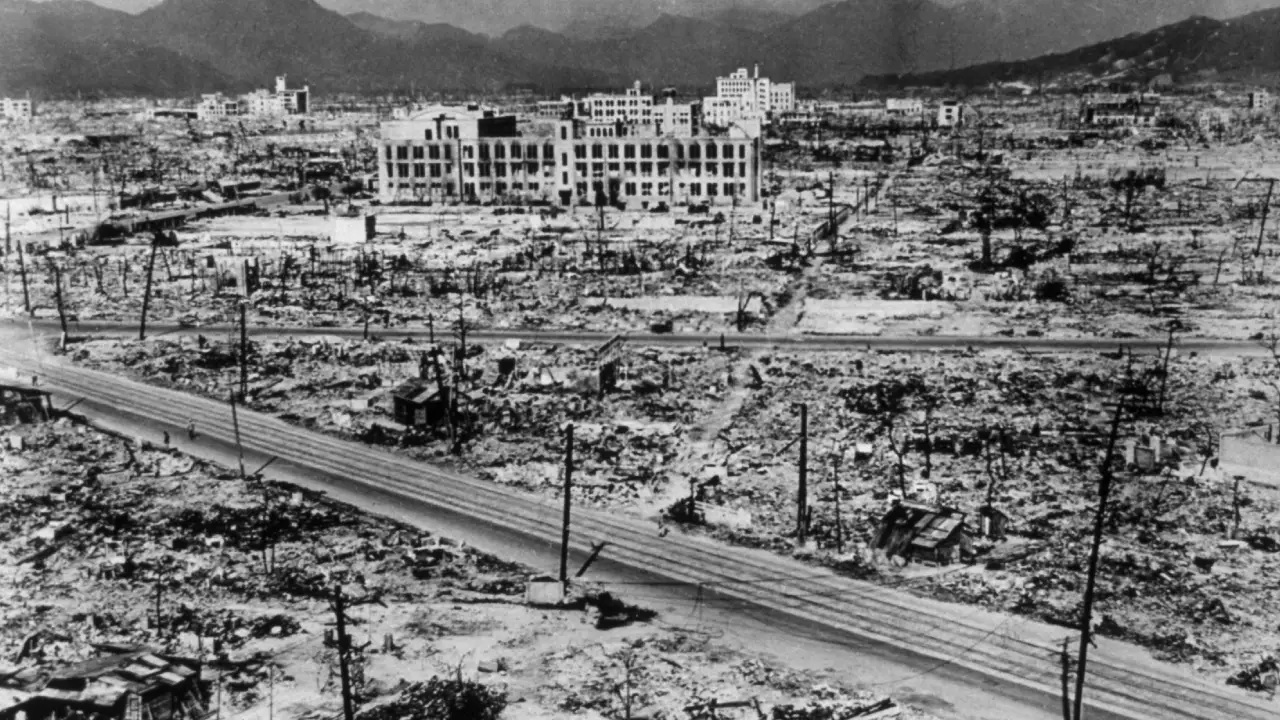
There is a peculiar problem with the familiar story of how the Second World War ended. If the atomic bombs forced Japan to surrender, why did the Japanese leadership remain divided after Hiroshima? And if the Soviet Union’s entry into the war was decisive, why did Japan not surrender immediately after Moscow declared war?
The questions become more uncomfortable when we discover that the two events occurred within days of each other, while Japanese leaders were struggling with a problem that neither a devastating new weapon nor a foreign invasion could solve automatically: how to end a war without destroying the political system they wanted to preserve.
This is where historian Tsuyoshi Hasegawa enters the investigation. In his 2005 book, Racing the Enemy: Stalin, Truman, and the Surrender of Japan, he examined American, Japanese and Soviet records to challenge a deeply established explanation of the war’s ending. His argument was provocative: the Soviet Union’s entry into the Pacific War mattered more to Japan’s decision to surrender than the atomic bombings did.
Hasegawa did not discover that Hiroshima was unimportant, nor did he establish a universally accepted alternative explanation. He did something more consequential. He changed the question from What did the atomic bomb do to Japan? to What combination of military pressure, diplomatic failure and political fear finally made Japan’s leaders choose surrender?
That distinction is the beginning of a much larger historical investigation.
The Historian Who Opened Three Archives Instead of One
The controversy surrounding Hiroshima has often been treated as an argument about American morality: Was President Harry Truman justified in using atomic weapons, or could the war have ended without them?
That is an important question, but Hasegawa believed it was incomplete. A decision made in Tokyo could not be fully understood by studying Washington alone.
His background in Russian history gave him a particular advantage. He could investigate Stalin’s calculations alongside Truman’s decisions and the arguments taking place within Japan’s leadership. His evidence crossed three political worlds whose governments had different aims, different information and different understandings of the war.
Published by Harvard University Press in 2005, Racing the Enemy became influential partly because it reconstructed the final days of the war as an international contest rather than an exclusively American story. The book received the Robert Ferrell Book Prize in 2006 and Japan’s Yomiuri Yoshino Sakuzo Prize.
The title contains an important clue. The United States and the Soviet Union were not simply trying to defeat Japan. They were also competing over the political order that would follow its defeat.
The bomb was a weapon. The Soviet advance was a military operation. But both were also signals about who would possess power in post-war Asia.
To understand the surrender, Hasegawa argued, we must examine all three dimensions at once.
August 1945: Nine Days That Reordered the World
To understand the argument, we need to follow the calendar carefully. The sequence is familiar; its political meaning is less so.
Japan had been fighting a devastating war across Asia and the Pacific since long before 1945. By that summer, American bombing, the naval blockade, shortages and the loss of territory had weakened its ability to continue. Yet surrender remained politically dangerous because Japanese leaders disagreed over what defeat should mean for the emperor and the imperial system.
The government had also looked to the Soviet Union, which was still formally neutral toward Japan, to help negotiate an end to the war. Tokyo hoped Moscow might mediate acceptable terms. This was a fundamental miscalculation: Stalin had already committed to entering the war against Japan.
The decisive sequence
- July 26, 1945 — The Potsdam Declaration
The United States, Britain and China demanded Japan’s surrender and warned of destruction if it continued fighting. The declaration did not explicitly guarantee that the emperor would retain his position.
- August 6 — Hiroshima
The United States dropped the uranium bomb Little Boy. The destruction was immense, but the Japanese government did not immediately settle on surrender.
- August 8–9 — Soviet entry into the war
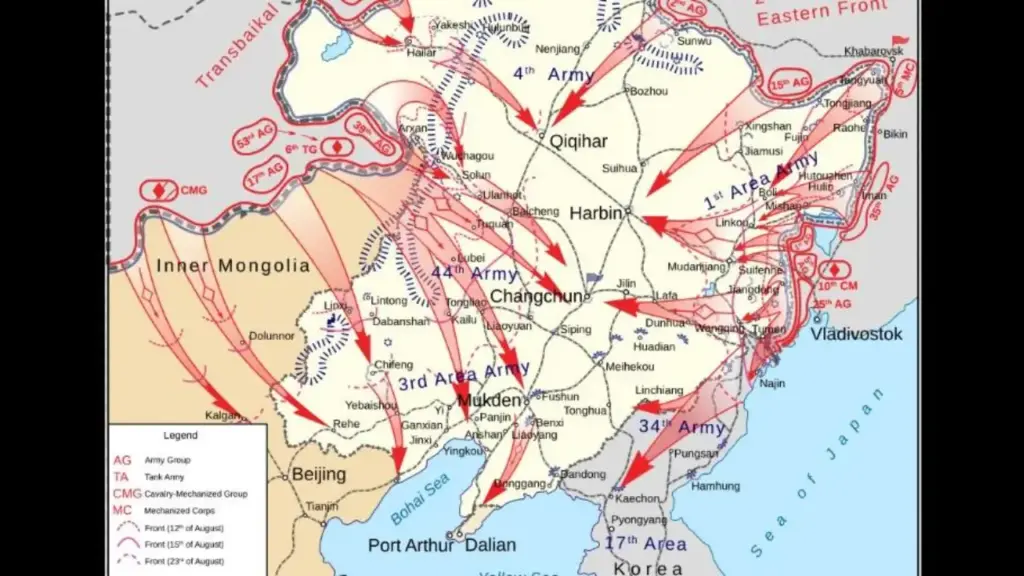
Moscow declared war on Japan on August 8, and Soviet forces attacked Japanese positions in Manchuria after midnight on August 9 local time.
- August 9 — Nagasaki and the Supreme Council
The United States dropped the plutonium bomb Fat Man on Nagasaki. Japanese leaders confronted both nuclear destruction and the collapse of their remaining diplomatic strategy.
- August 10–14 — The surrender decision
Japan communicated an offer to accept the Potsdam terms while seeking to preserve the emperor’s status. The Allies replied that the emperor’s authority would be subject to the Supreme Commander for the Allied Powers. Internal conflict continued, and Emperor Hirohito intervened to break the deadlock.
- August 15 — The public announcement
Hirohito announced Japan’s acceptance of the surrender terms in a radio broadcast.
- September 2 — Formal surrender
Japanese representatives signed the Instrument of Surrender aboard the USS Missouri in Tokyo Bay.
The chronology reveals a crucial point: Japan’s decision did not follow a single, instantaneous shock. The government continued debating after both atomic attacks and the Soviet offensive began. That delay does not prove that either event was ineffective. It shows that military catastrophe had to pass through a political system capable of resisting the obvious.
The sequence is documented in Japanese records, intercepted diplomatic communications and American government archives.
Why the Soviet Union Was More Frightening Than Another Bomb
Hasegawa’s central insight concerns the difference between losing a battle and losing every remaining option.
The atomic bomb introduced a terrifying new scale of destruction. Hiroshima demonstrated that one aircraft could devastate a city with a single weapon. Nagasaki reinforced the warning that the attack was not necessarily a one-time event.
But Japan had already endured conventional bombing on a vast scale. Its leaders knew that cities could burn, civilians could die in enormous numbers and the industrial base could be destroyed. This does not mean they considered nuclear weapons ordinary. It means the bomb entered a country whose leadership had already shown a disturbing willingness to endure mass suffering rather than accept defeat.
The Soviet attack threatened a different part of the Japanese strategy.
Tokyo had hoped Moscow might mediate between Japan and the Allies. Soviet entry destroyed that hope while opening another front. Japanese forces in Manchuria faced a major Soviet offensive, and the possibility of Soviet advances into other Japanese-held territories became a strategic concern.
There was also a political fear. If the war continued, Japan might face not simply an American-led occupation but a Soviet role in determining its future. Japanese leaders who wanted to preserve the imperial institution had reason to fear the consequences of a prolonged war and a widening Soviet presence.
Hasegawa therefore argues that Soviet intervention struck at Japan’s remaining diplomatic and strategic options. The bomb threatened further destruction; the Soviet offensive threatened to make the political outcome of defeat much less controllable.
That distinction helps explain why the Soviet declaration of war could have such an enormous effect even though the United States possessed the more revolutionary weapon.
Yet it would be misleading to turn this into a simple verdict that the Soviet Union ended the war and the bombs did not. Hasegawa’s thesis is an interpretation of the relative weight of evidence, not a measurement that can be read directly from a document.
Three Countries, Three Different Stories
The surrender looks different depending on which government’s records we examine.
| Perspective | Central concern | What the evidence helps explain |
| United States | End the war, avoid further casualties and establish the post-war settlement | Why atomic weapons were used and why American leaders later defended their necessity |
| Japan | End the war while limiting damage to the emperor and political system | Why leaders debated surrender terms even after devastating military shocks |
| Soviet Union | Defeat Japan and expand its position in post-war Asia | Why the timing of Soviet entry mattered to diplomacy as well as military operations |
The American account traditionally emphasizes the bombs as instruments that brought surrender without a costly invasion of the Japanese home islands. The argument has a serious foundation: American planners anticipated further fighting, and the prospect of invasion was not imaginary.
But a planned invasion is not an event that actually happened. Casualty estimates varied, and claims that the bombs unquestionably saved a particular number of lives depend on assumptions about how the war would otherwise have unfolded. They should not be treated as settled statistics.
The Japanese perspective introduces another complication. The country’s ruling elite was not a single mind. Some leaders sought a negotiated end; military hardliners resisted surrender. Even after the attacks, a faction attempted to prevent the emperor’s surrender decision from being implemented.
The Soviet perspective adds the strategic race. Stalin had reasons to enter the war before Japan’s defeat was complete, so the Soviet Union could influence the settlement and gain territory and political leverage in East Asia.
None of these perspectives alone explains the outcome. Together, they reveal why the end of the war was both a military event and a contest over the future of Asia.
The Bomb, the Invasion or the Emperor?
The most revealing evidence may be the decision that finally ended the deadlock inside Japan.
Japan’s Supreme War Council, often called the “Big Six,” was deeply divided. The dispute concerned not only whether to surrender but also the conditions under which surrender could occur. The emperor’s position was central to the disagreement.
On August 9, after Hiroshima, Soviet entry and the bombing of Nagasaki had transformed the situation, the leadership still could not agree. Emperor Hirohito intervened in favour of accepting the Allied terms, with the preservation of the imperial institution remaining a critical concern.
This matters because a military event and a political decision are not the same thing. A bomb can destroy a city. An invasion can eliminate a diplomatic strategy. Neither can, by itself, sign a surrender document.
Hasegawa’s interpretation gives particular weight to Soviet intervention because it changed the choices facing the Japanese leadership. But the emperor’s intervention was the immediate mechanism through which the deadlock was broken.
The distinction between these causes is essential:
Background causes: blockade, conventional bombing, military defeat and declining capacity to continue the war.
Accelerating shocks: Hiroshima, Soviet entry and Nagasaki.
Political mechanism: the struggle within Japan’s leadership over surrender conditions.
Immediate decision: Hirohito’s intervention and the government’s acceptance of the Allied terms.
These categories are analytical, not a mathematical formula. The evidence does not establish that each factor contributed a measurable percentage to the outcome.
The distinction also challenges the popular image of a country that surrendered simply because it witnessed the power of a new weapon. Japan’s leadership had to decide that continuing the war was worse than accepting an uncertain peace.
What the Archives Reveal and What They Cannot Prove
One of Hasegawa’s lasting contributions was methodological. He demonstrated why the end of the war must be reconstructed from multiple archives rather than from public statements made after victory.
The National Security Archive’s updated collection, published on August 5, 2025, to mark the 80th anniversary of the bombings, provides an excellent way to examine this evidence independently. It brings together declassified American government records, intercepted Japanese diplomatic messages, translated Japanese accounts and material relating to Soviet operations.
Three findings deserve particular attention.
First, American officials did not possess perfect knowledge of Japan’s intentions. Intelligence assessments and private diaries reveal uncertainty over whether Japan was close to surrender. Historical decisions must be judged partly against what decision-makers knew at the time, not only against what became obvious afterward.
Second, the Japanese government was not uniformly ready to surrender. Intercepted messages and accounts of the August meetings reveal continuing resistance among military leaders, even after the atomic attacks and Soviet declaration of war. The failed coup attempt on the night of August 14–15 is a particularly striking reminder that surrender was contested within Japan itself.
Third, the American-Soviet rivalry was already influencing the settlement. Documents concerning surrender negotiations show American officials concerned about Soviet influence over the occupation of Japan. The end of the war was therefore not just about defeating an enemy; it was also about shaping the peace that followed.
There is, however, a limit to what archives can establish. Documents tell us what individuals wrote, what officials believed and what governments communicated. They do not automatically reveal every private motive, and a diary entry may contradict another participant’s account.
Nor can historical records provide a definitive answer to a hypothetical question such as whether Japan would have surrendered on August 10 without Nagasaki, or whether Soviet intervention alone would have produced the same outcome.
Such counterfactuals can be assessed for plausibility. They cannot be observed directly.
Why Historians Still Disagree
Hasegawa’s argument did not end the debate. It sharpened it.
Historian Richard B. Frank and other scholars have argued that the atomic bombings played a more decisive role than Hasegawa allows. Their interpretation gives greater weight to the shock of Hiroshima, the demonstration of American technological power and the possibility that further atomic attacks could follow.
Hasegawa instead argues that Soviet entry had the greater effect on Japan’s surrender decision, particularly because it destroyed the hope of Soviet mediation and intensified the threat to Japan’s strategic position.
A third interpretation stresses the interaction between the two events. Historian Marc Gallicchio argued that the nuclear attacks and Soviet intervention were so closely intertwined that historians cannot neatly separate their effects.
The disagreement becomes clearer when the arguments are compared.
| Historical question | Hasegawa’s emphasis | Competing interpretation |
| What changed Japan’s strategic position most? | Soviet entry and the destruction of the mediation strategy | The atomic bombings and the prospect of further nuclear destruction |
| Why did surrender occur in August? | Combined pressure, with Soviet intervention especially important | Nuclear shock, Soviet intervention and other pressures acting together |
| Why was surrender delayed? | Political divisions and the emperor’s central role | The same internal divisions, alongside uncertainty about the scale and consequences of American attacks |
| Can one event be identified as decisive? | Soviet entry deserves greater weight | The causes were too interconnected for a confident single-factor verdict |
There is an important distinction between challenging an established narrative and replacing it with another oversimplification. Hasegawa’s work is strongest when it forces historians to take Soviet strategy and Japanese political calculations seriously. Its most controversial claim is that the Soviet factor can be ranked above the atomic bombings with confidence.
The evidence supports the importance of both. Their precise relative weight remains contested.
The Human Cost Behind the Historical Argument
Any analysis of causation must not turn Hiroshima and Nagasaki into abstract pieces on a diplomatic chessboard.
The bombings killed enormous numbers of civilians, destroyed homes and hospitals, and exposed survivors to radiation and long-term illness. The precise death toll remains uncertain because records were destroyed, people disappeared and deaths continued after the explosions.
A commonly cited estimate is that approximately 140,000 people had died in Hiroshima by the end of 1945. Estimates for Nagasaki are often around 70,000 by the end of that year, though figures vary by source and methodology. These are estimates, not exact counts.
The Soviet offensive also brought devastating consequences for Japanese forces and civilians across occupied territories. It accelerated the collapse of Japan’s continental position and contributed to the upheaval that followed the war.
Recognising the Soviet role does not diminish the human catastrophe of the atomic bombings. Recognising the bombs’ destructive power does not make Soviet intervention historically irrelevant.
Nor does explaining why leaders acted amount to justifying their decisions. Historical explanation and moral judgment are related, but they are not interchangeable.
The uncomfortable question remains: if several forces contributed to Japan’s surrender, what does that tell us about claims that the bombings were the only way to end the war?
It tells us to examine the alternatives, the uncertainties and the assumptions behind the claims. It does not give us permission to pretend that any alternative would certainly have saved lives or ended the war sooner.
The Unfolded Lesson: History Is Not a Single-Cause Equation
Hasegawa changed the debate by showing how much disappears when history is written from only one country’s point of view.
The United States possessed the atomic bomb. The Soviet Union possessed an enormous army and its own strategic ambitions. Japan possessed a political leadership that could not agree on how to accept defeat. None of these facts, considered separately, explains the final decision.
The war ended through an interaction between military destruction, geopolitical pressure and a political choice made under extraordinary conditions.
That is a more demanding explanation than saying the atomic bomb ended the war. It is also more useful. It shows how leaders can continue making disastrous decisions even after the evidence of defeat becomes overwhelming, and how the fear of a future political order can influence decisions as much as immediate physical destruction.
Hasegawa’s most important contribution is therefore not a final answer to the question of Hiroshima. It is a demonstration of how historical understanding changes when researchers open archives that earlier narratives left at the margins.
The evidence does not support a simple declaration that the Soviet Union alone forced Japan to surrender, any more than it establishes that the atomic bombs alone made surrender inevitable. It supports a more difficult conclusion: the war ended when several pressures converged and Japan’s emperor finally broke a political deadlock.
The mystery is not that historians disagree. It is that a decision with consequences so immense can look so different when viewed from Washington, Moscow or Tokyo.
The lesson of Racing the Enemy is that history becomes clearer not when we find one event to explain everything, but when we discover which parts of the story were missing.
Frequently asked questions
Did the atomic bombs force Japan to surrender?
They were a major factor, but historians disagree about their relative importance. Hasegawa argues that Soviet entry into the war mattered more to Japan’s decision. Other scholars give greater weight to the bombings or argue that the two shocks cannot be separated confidently.
Why was the Soviet declaration of war so important?
Japan had hoped that Moscow could mediate an end to the war. Soviet entry destroyed that diplomatic strategy and opened a new military crisis in Manchuria, while raising fears about Soviet influence over Japan’s future.
Who was Tsuyoshi Hasegawa?
He is a historian specialising in Russian history and the international history of the end of the Pacific War. His 2005 book, Racing the Enemy, examined American, Japanese and Soviet records to challenge conventional explanations of Japan’s surrender.
Did Japan surrender immediately after Nagasaki?
No. Japanese leaders continued debating the terms of surrender. Hirohito intervened to break the deadlock, the surrender announcement was broadcast on August 15, 1945, and the formal surrender was signed on September 2.
What is the strongest evidence for Hasegawa’s argument?
His comparative use of Japanese records, Soviet-related evidence and American diplomatic documents helps demonstrate that Soviet intervention fundamentally changed Japan’s strategic choices. The interpretation remains debated because the bombings and the Soviet offensive occurred so close together.
Further reading: Primary sources and reliable references
The following resources allow readers to move beyond competing summaries and inspect the historical record.
1. Racing the Enemy: Stalin, Truman, and the Surrender of Japan
Tsuyoshi Hasegawa · Harvard University Press, 2005
The central work behind this article’s investigation of the three countries’ competing calculations.
2. The Atomic Bombings and the End of World War II, 80 Years Later
National Security Archive · Updated August 5, 2025
An extensive collection of declassified records, intercepted communications, Japanese meeting accounts and documents relating to the bombings and surrender.
Explore the archival collection
3. Truman’s August 14, 1945 news conference
Harry S. Truman Presidential Library
A primary source for the American government’s public account of Japan’s acceptance of the Potsdam Declaration.
4. The Atomic Bombs and the Soviet Invasion: What Drove Japan’s Decision to Surrender?
Tsuyoshi Hasegawa · Asia-Pacific Journal, 2007
Hasegawa’s own extended presentation of the argument, including why he assigns greater weight to Soviet intervention.
5. U.S. National Archives
Official U.S. government records
Search for wartime diplomatic records, military reports and documents concerning the atomic bombings and Japan’s surrender.
6. National Diet Library of Japan
Official Japanese library and archival resources
A useful starting point for Japanese historical publications, digitised materials and research on the end of the war.
Explore the National Diet Library


Leave a Reply