
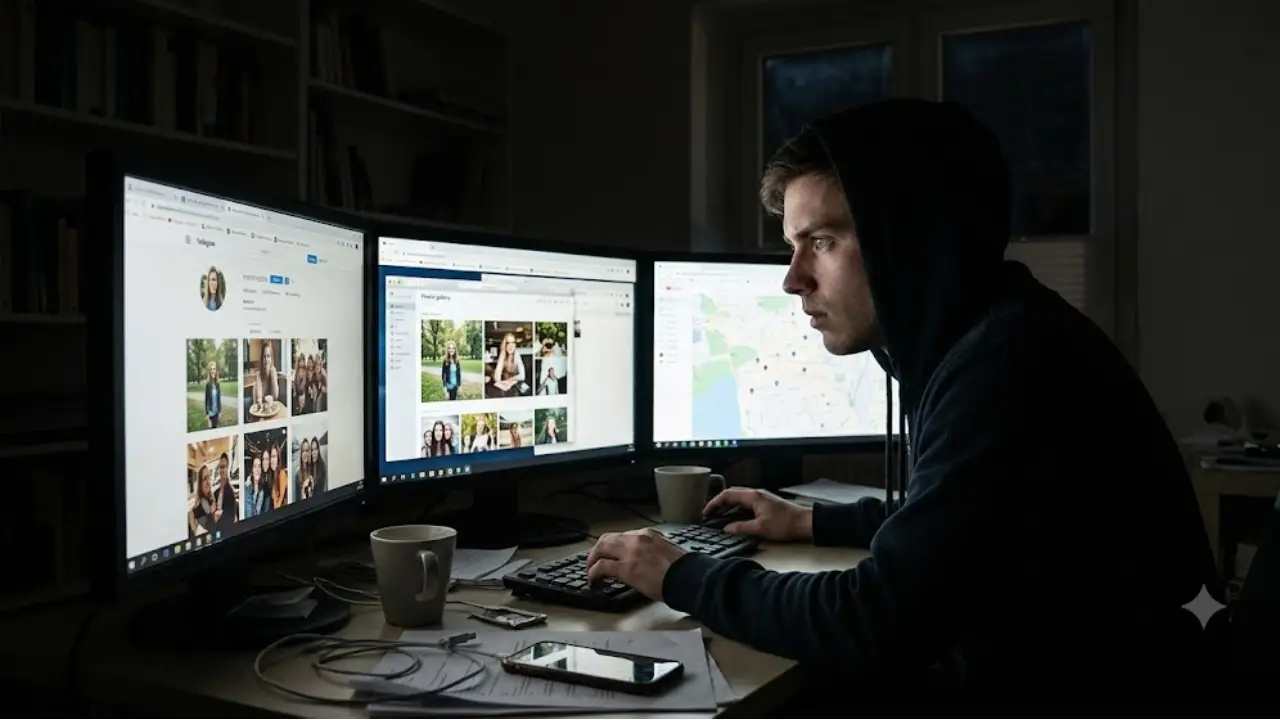
There is a message on your phone. Nothing threatening. Nothing that would make you call the police. Just a message from someone you do not particularly want to hear from.
You do not reply.
Another message arrives the following day. You ignore it again. Perhaps the person asks whether you are busy. Perhaps they send a joke, an apology, or a question that appears perfectly harmless. You may even feel a little guilty for not responding. After all, they have not threatened you. They have only tried to talk.
Then they contact you through another account.
A few days later, they mention a place you visited. They seem to know when you were online. You block their number, only to discover a new account waiting in your messages.
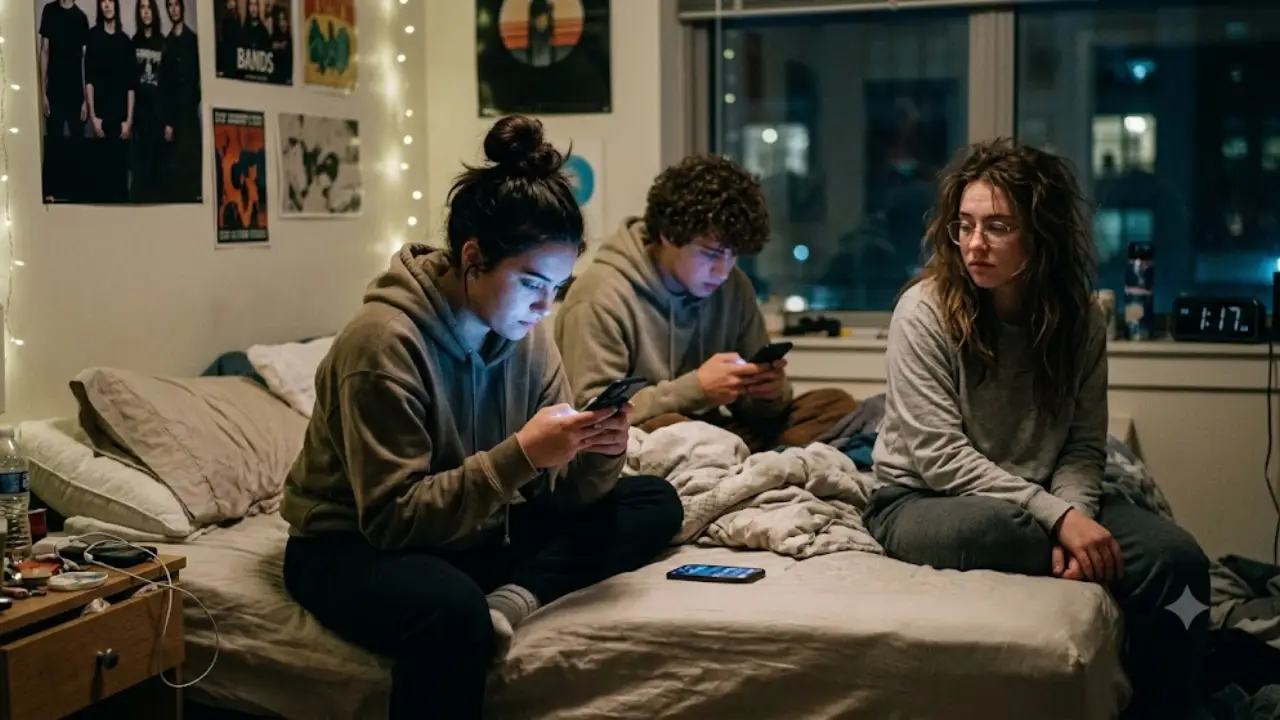
Nothing has happened that can easily be described as a dramatic incident. Yet something has changed. You are no longer simply deciding whether to answer a message. You are beginning to adjust your behaviour around the possibility of receiving the next one.
You check your phone before leaving home. You wonder how much the other person knows. You hesitate before posting a photograph. You begin asking yourself a question that is surprisingly difficult to answer:
Am I overreacting, or is this becoming something more serious?
This is where the subject of stalking deserves closer attention. The problem is not that every persistent message is dangerous. It is that unwanted attention can become a pattern of intrusion long before it looks like the sort of incident people recognise from crime reports or films.
The important question is not simply how many messages someone sends. It is what happens when your freedom to ignore them, refuse them or move on is no longer being respected.
The moment attention stops being harmless
Most people have experienced unwanted attention. Someone sends a message that receives no reply. A former friend wants to reconnect. An acquaintance mistakes politeness for interest. These situations can be uncomfortable without necessarily amounting to stalking.
People misread social signals. They make awkward attempts at conversation. Sometimes they send one message too many and then stop.
The distinction becomes more concerning when the other person repeatedly ignores a clear boundary and finds new ways to reach you.
Imagine that you tell someone, “I do not want further contact. Please do not message me again.” They may dislike your decision. They may feel hurt. But the boundary is now clear. If they continue sending messages, create new accounts after being blocked, approach you repeatedly in places you visit, or monitor your online activity, the behaviour deserves to be assessed as a pattern rather than dismissed as an isolated misunderstanding.
There is no universal number of messages that automatically turns unwanted attention into stalking. One threatening encounter can be serious, while several ordinary messages do not necessarily establish stalking. Context, repetition, the person’s response to refusal, the methods they use and the effect on your safety all matter.
A useful question is this: Is this person trying to communicate with me, or are they trying to make it difficult for me to escape their attention?
The answer may not be immediately obvious. But it gives you a better starting point than asking whether the behaviour is romantic, flattering or merely annoying.
“I only want to talk.” Why that explanation can mislead us
Persistent attention often arrives wrapped in reasonable-sounding explanations.
“I need closure.”
“I just want five minutes.”
“You could at least reply.”
“I have done nothing wrong.”
Each statement might be sincere. Someone may genuinely want an explanation, an apology or another chance. But sincerity does not create a right to another person’s time.
A refusal does not have to satisfy the person receiving it. You do not have to provide a convincing argument, answer every question or continue a conversation until the other person agrees that it is over.
This matters because people often delay protecting themselves while trying to be fair. They reply once more to avoid seeming rude. They explain the same decision in different words. They unblock an account because the other person promises to stop. They agree to a meeting because refusing feels cruel.
Sometimes the contact ends. Sometimes every response becomes an invitation to continue.
That does not mean you caused the behaviour by replying. Responsibility for repeated intrusion belongs to the person choosing to continue it. But if someone repeatedly treats every answer as an opportunity to reopen a conversation, you are allowed to stop participating.
If it feels safe, one clear message can establish your boundary. After that, silence is not a puzzle you must solve for the other person. And if sending a refusal might provoke retaliation, you do not have to send one at all.
The digital trail: when your phone becomes a route into your life
Stalking used to be imagined mainly as someone following another person through streets or waiting outside a home. Digital technology has made unwanted contact easier to sustain, sometimes across several platforms and without a physical encounter.
A person may contact you through messaging apps, social media, email, gaming platforms or new phone numbers. They may repeatedly create accounts after being blocked. They may refer to information about your routine that you did not knowingly share with them.
But digital clues need careful interpretation.
A suggested friend, an unfamiliar login alert or a social media recommendation does not, by itself, prove that someone is monitoring you. Platforms use automated systems, shared contacts and many other signals. A location appearing in a photograph may have been exposed through a public post rather than through sophisticated surveillance.
The more useful approach is to look for a pattern supported by evidence.
Has someone repeatedly contacted you after being told to stop? Do new accounts appear shortly after you block previous ones? Have they mentioned private details that you cannot explain through ordinary public information? Are they using other people to pass messages after you have refused contact?
None of these questions independently establishes a crime. Together, however, they may help you identify what is happening and explain it clearly when seeking assistance.
Also remember that digital privacy is not only about hackers. A location-sharing setting, an account still logged in on an old device, a shared family account or a person who knows your passwords can expose information without any dramatic technical intrusion.
The goal is not to imagine the worst explanation. It is to check the ordinary explanations first, secure what you can, and take repeated boundary violations seriously.
How to recognise escalation before it becomes a crisis
Think of unwanted attention as a pattern that can change over time.
At first, there may be one unwanted message. Then come repeated requests for a response. After you refuse, the person may switch platforms, use another number or ask friends to contact you. More serious warning signs include attempts to discover your whereabouts, showing up repeatedly at places you visit, interfering with your relationships, threatening you, damaging property or suggesting that they can reach you wherever you go.
Not every case follows this sequence. Someone may become threatening immediately; another person may stop after a single refusal. The purpose of noticing escalation is not to predict a crime with certainty. It is to recognise when the cost of waiting for absolute proof may be too high.
Pay attention to three things.
First, the response to your boundary. Does the person accept your decision, or treat it as a challenge?
Second, the expansion of contact. Are they moving from one channel to several, or from online messages to physical appearances?
Third, the effect on your choices. Are you changing routes, avoiding friends, hiding ordinary activities or feeling unable to use your own accounts freely because of this person’s behaviour?
Your discomfort alone does not prove another person’s intent. But you do not need to establish intent before taking reasonable precautions. Safety decisions can be based on credible concerns, even when the full explanation remains uncertain.
What to do when the pattern begins to worry you
The first useful step is not to investigate the other person. It is to regain control over your own safety.
If you believe you are in immediate danger, move to a safer place and contact emergency services. In India, dial 112. Do not delay seeking help to collect screenshots or complete a checklist.
If the danger is not immediate, begin by keeping a clear record. Save messages, emails, call logs, usernames, profile links, dates and times. Preserve threatening messages before blocking or reporting an account, where it is safe to do so. Screenshots can help, but retain original messages and other records where possible. Keep a copy somewhere the other person cannot access.
Do not feel obliged to reply to every message to build a stronger case. Nor should you arrange a private meeting to ask the person to explain themselves. If you are worried about how they might react, involve someone you trust and avoid meeting them alone.
Next, review the routes through which they could reach you. Check privacy settings, active account sessions, recovery email addresses and phone numbers, location sharing, shared devices and apps with access to your location. Use unique passwords and enable two-factor authentication where possible. If you suspect someone can see your device activity, use a safer device to seek help before changing settings; sudden changes may alert a person who is monitoring you.
Consider practical protections as well. Tell a trusted friend or family member what has been happening. If the person knows your workplace, school or residential building, consider informing appropriate security staff. Agree on a simple check-in plan if you are concerned about being followed.
Finally, report the behaviour when appropriate. In India, the National Cyber Crime Reporting Portal at https://cybercrime.gov.in/ accepts reports of cybercrime, including matters involving women and children. The portal is not a substitute for emergency assistance or a guarantee of a particular outcome. For immediate danger, use 112; for other offences, local police can advise on the appropriate route.
The sequence matters: protect yourself, preserve what you can safely preserve, secure your accounts and seek support. You do not have to complete every step before asking for help.
What Indian law says about stalking
India’s Bharatiya Nyaya Sanhita, 2023, includes a specific offence of stalking under Section 78. The provision addresses a man who follows a woman and repeatedly contacts or attempts to contact her to foster personal interaction despite a clear indication of disinterest, as well as monitoring her use of the internet, email or other electronic communication, subject to the statutory exceptions.
The law provides for imprisonment of up to three years and a fine for a first conviction, and up to five years and a fine for a second or subsequent conviction.
The legal definition is specific. Not every unwanted message automatically satisfies Section 78, and the application of the law depends on the facts and relevant exceptions. Other legal provisions may be relevant where threats, harassment, privacy violations or other conduct are involved. The BNS came into force on 1 July 2024.
Read the official text of the law through India Code’s Bharatiya Nyaya Sanhita document. For emergency support, visit 112 India. For cybercrime reporting, visit the National Cyber Crime Reporting Portal.
This is general information, not a legal determination of any particular case. If you are unsure whether the behaviour meets a criminal threshold, you can still document it and ask the police or a qualified legal professional what options are available.
Why people wait before asking for help
One reason stalking can remain hidden is that people often judge themselves before they judge the behaviour.
They wonder whether they are being dramatic. They worry that friends will dismiss the messages as harmless. They fear that reporting the matter will make it more public. Some believe they need proof of a serious threat before they deserve assistance.
There is also a familiar cultural story that treats relentless pursuit as proof of devotion. In films and popular narratives, a person who refuses to give up is sometimes portrayed as romantic. In real life, persistence without consent can become exhausting, frightening and controlling.
The difference is not whether someone has strong feelings. It is whether they respect the other person’s freedom.
A person can feel rejected without being entitled to continued access. They can want closure without demanding a meeting. They can disagree with your decision without trying to defeat it.
And you do not need to wait until you are frightened every day to take repeated boundary violations seriously.
The question that matters most
Return to the phone at the beginning of this story. There is no single message that explains everything. The change lies in the pattern: a refusal is ignored, blocks are bypassed, private boundaries are tested, and ordinary life begins to narrow around another person’s attention.
That pattern deserves to be examined without exaggeration and without dismissal.
A strange recommendation on a social platform is not proof of surveillance. An awkward message is not automatically stalking. But repeated unwanted contact, evasion of clear boundaries, monitoring and threatening behaviour should not be romanticised simply because each incident can be explained away on its own.
The most useful test is not whether you can prove what another person intends. It is whether their behaviour is repeatedly disregarding your boundaries, interfering with your privacy or making you feel unsafe—and what you can do to protect yourself now.
You are allowed to say no. You are allowed to stop responding. You are allowed to ask for help before a situation becomes a crisis.
Attention is something one person offers. Access is something the other person is free to refuse.
That is the boundary worth protecting.
Safety Checklist: What to Do If Someone Won’t Leave You Alone
When unwanted attention starts affecting your peace of mind, it can be difficult to decide what to do first. You do not need to complete every step, prove someone’s intentions or wait for a threat before protecting yourself. Start with the action that best fits your situation.
1. Check your immediate safety
- Am I in immediate danger? If someone is threatening, following or confronting you and you fear for your safety, move to a safer place and seek emergency assistance. In India, call 112.
- Have I told at least one trusted person what is happening?
- If I am worried about being followed, have I considered safer routes, accompanied travel or informing appropriate building or workplace security?
- Have I avoided arranging a private meeting simply to make the person stop?
2. Recognise the pattern
- Has the person continued contacting me after I clearly said no or asked them to stop?
- Have they created new accounts, used different numbers or contacted me through other people after being blocked?
- Have they repeatedly appeared at places I visit or referred to private details about my movements that concern me?
- Have they threatened me, tried to control whom I see, damaged property or made me afraid to follow my normal routine?
Remember: These are warning signs, not a diagnostic test or proof of a crime. One serious threat may warrant urgent action; you do not need to wait for a pattern to develop.
3. Preserve evidence safely
- Save relevant messages, emails, call logs, usernames, profile links, dates and times.
- Keep screenshots where useful, but preserve original messages and records when possible.
- Record incidents in a simple timeline: what happened, when, where and whether anyone witnessed it.
- Store copies somewhere the other person cannot access.
- Do not risk your safety or delay emergency help to collect evidence.
4. Secure your digital life
- Review who can see my posts, contact details and location.
- Check location sharing, shared accounts, active login sessions and unfamiliar devices.
- Change compromised passwords to strong, unique ones and enable two-factor authentication.
- Review account recovery details and remove access I no longer recognise or need.
- Block and report unwanted accounts when doing so is safe.
- If I suspect my device is being monitored, use a safer device to seek help before making changes that could alert the other person.
5. Choose a safe reporting route
- If there is immediate danger in India, call 112.
- For suspected online harassment or cybercrime, visit the National Cyber Crime Reporting Portal.
- Consider contacting local police or a qualified legal professional if the behaviour persists, escalates or includes threats.
- Keep a record of any report or complaint and the reference number, if one is provided.
- Ask a trusted person to accompany me or help organise the evidence if I feel overwhelmed.
6. Protect your peace of mind
- Remind myself that I do not owe anyone continued access to me.
- Stop explaining my refusal if further conversation only prolongs the contact.
- Tell someone I trust if the situation is affecting my sleep, work, relationships or sense of safety.
- Reassess my safety plan if the behaviour changes or escalates.
The most important rule: You do not need to prove that someone is a stalker before taking reasonable steps to protect yourself. Focus on the behaviour, your safety and the help available to you not on winning an argument about the other person’s intentions.







Leave a Reply