

The Mystery Beneath Cappadocia
There is a strange moment when archaeology stops feeling like history and starts feeling like a thriller.
It happened in a quiet town in central Türkiye in 1963.
A man was renovating his house in Derinkuyu, a town surrounded by the extraordinary volcanic landscape of Cappadocia. He was not looking for an ancient civilisation. He was not searching for buried treasure. He was simply making changes to his home.
Then something unexpected appeared behind a wall.
A dark opening.
He looked inside.
There was a passage.
The passage went down.
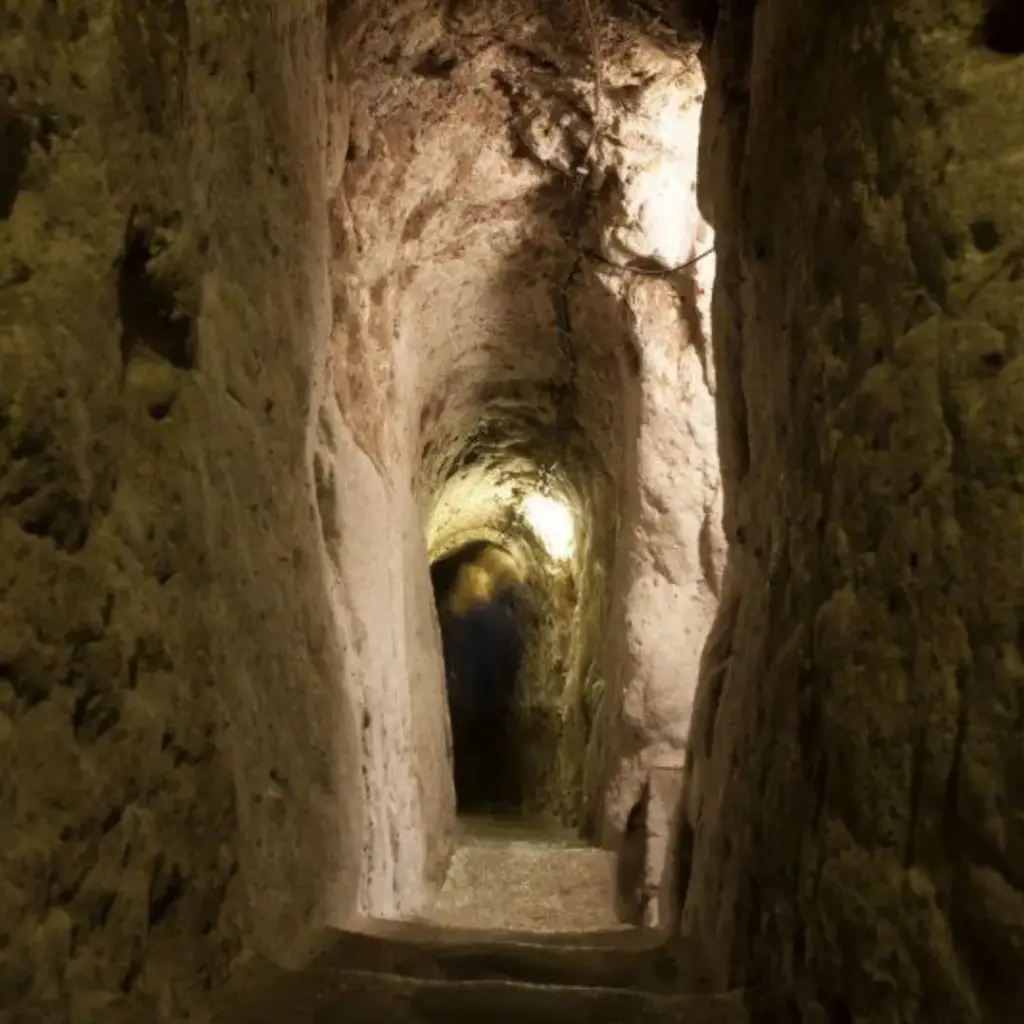
What happened next would reveal one of the strangest archaeological landscapes on Earth.
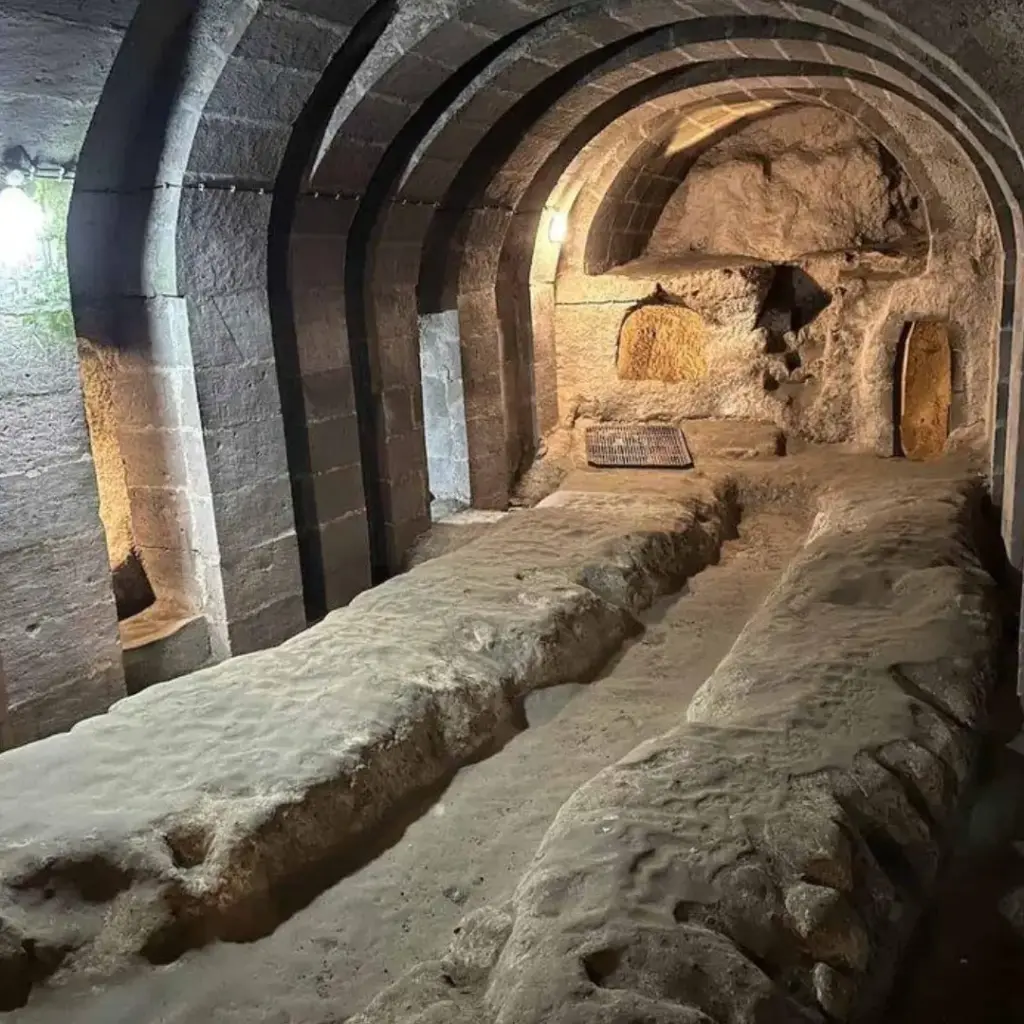
Because beneath the ordinary houses, roads and fields of Derinkuyu was another world a world carved into the rock, descending deep into the earth.
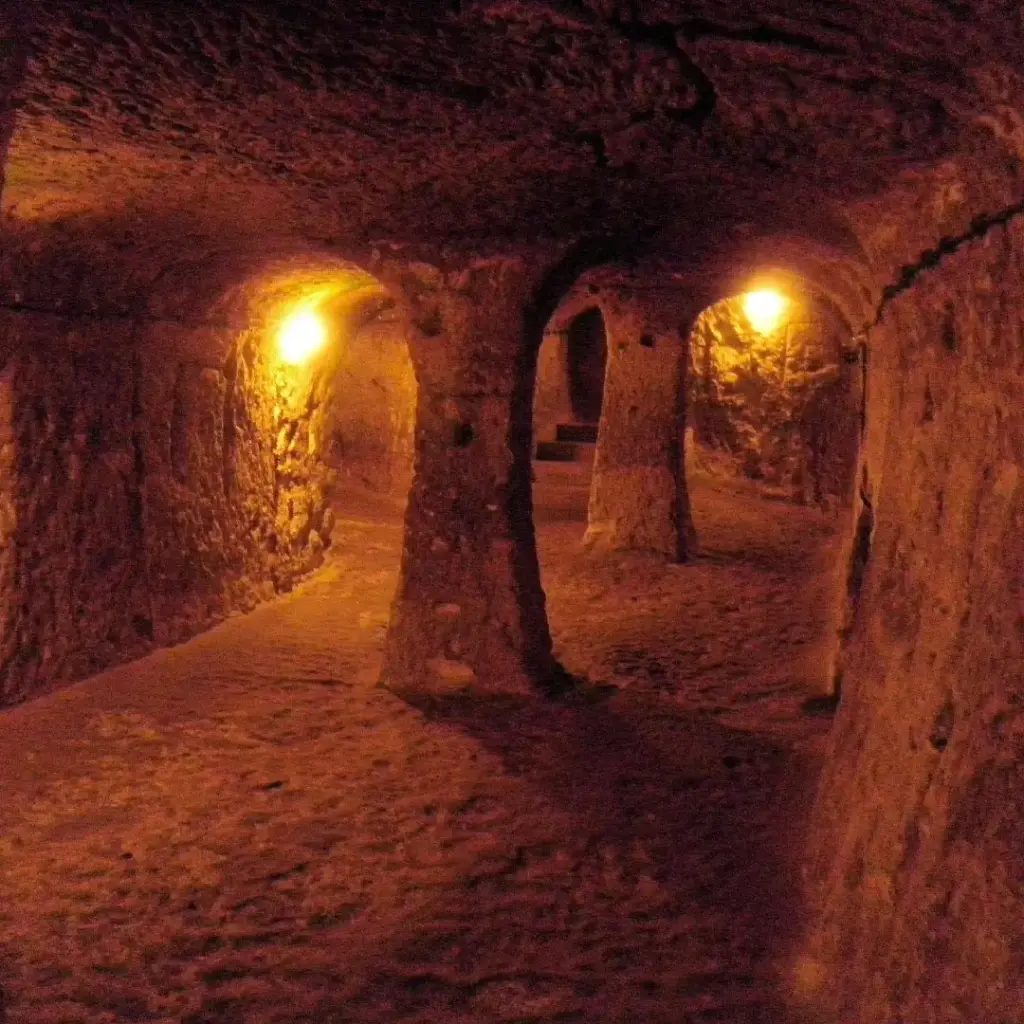
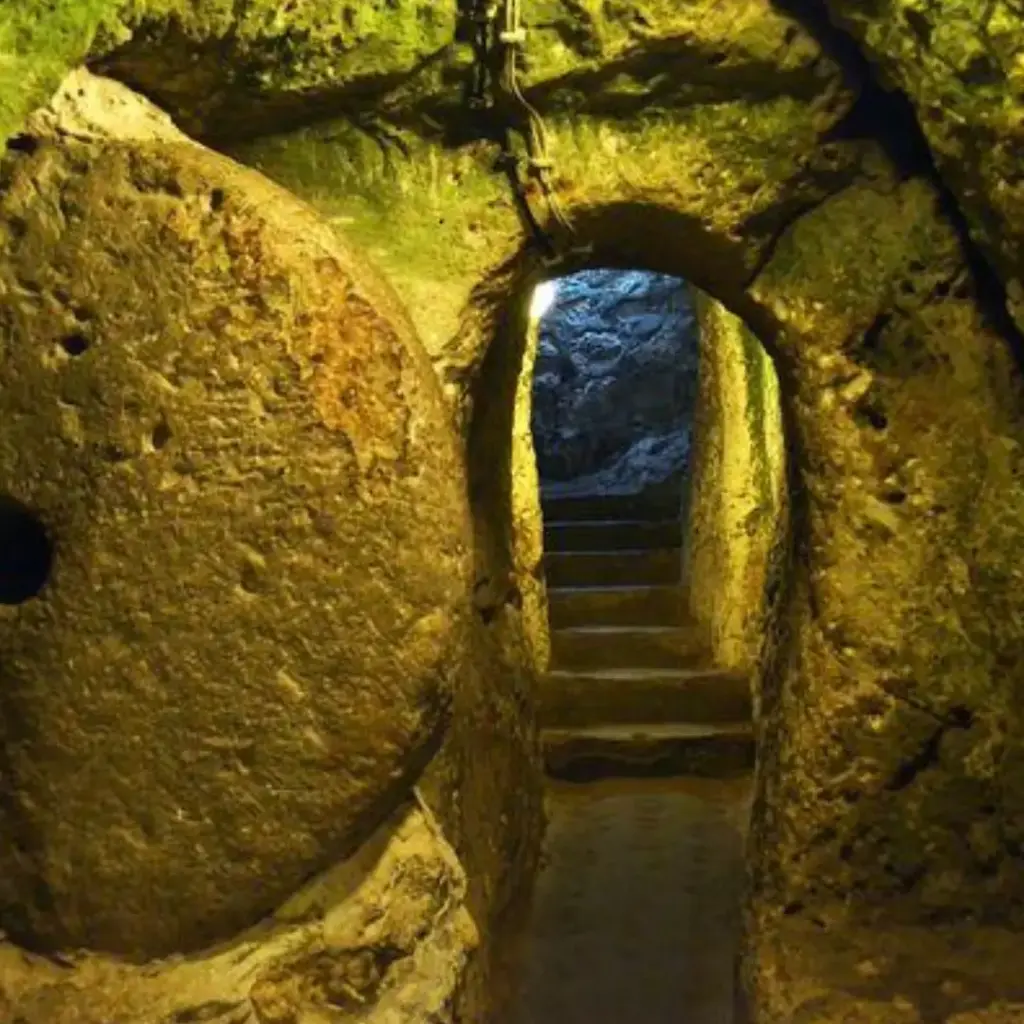
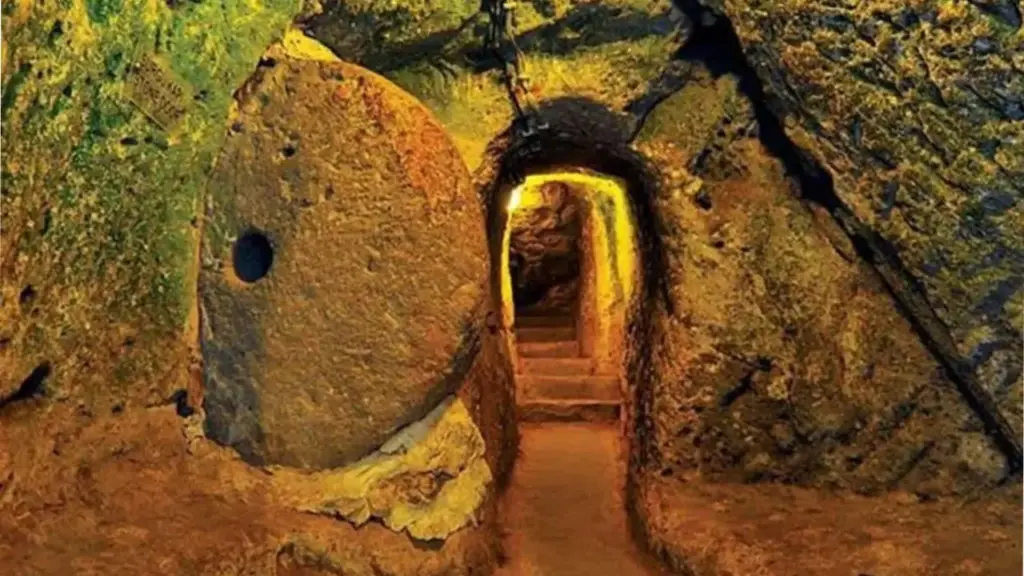
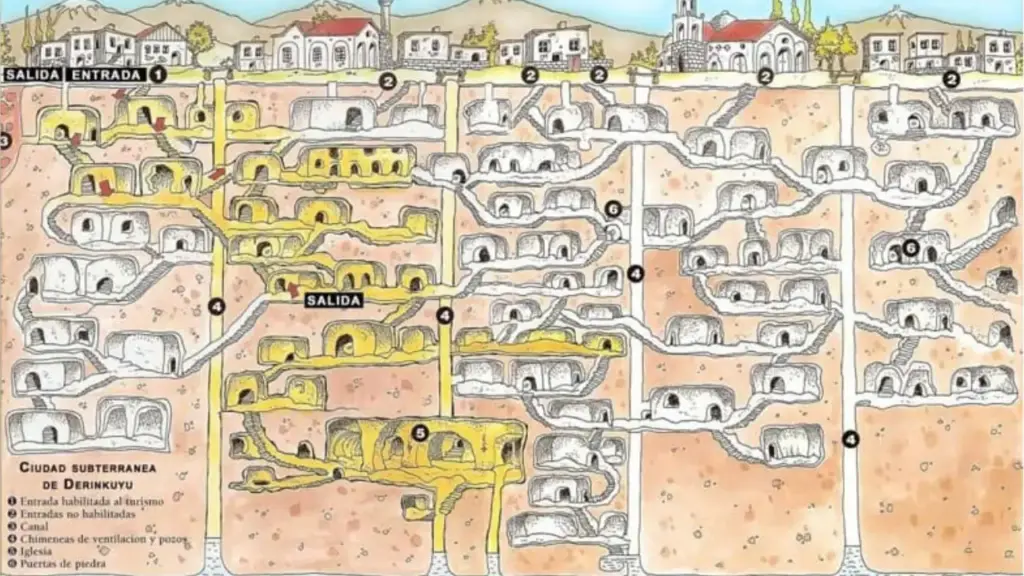
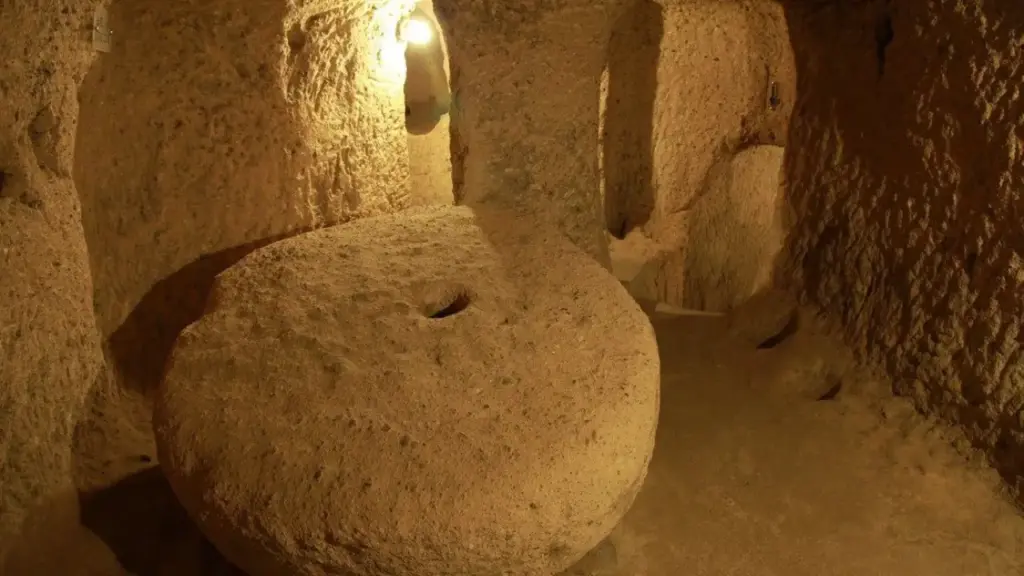
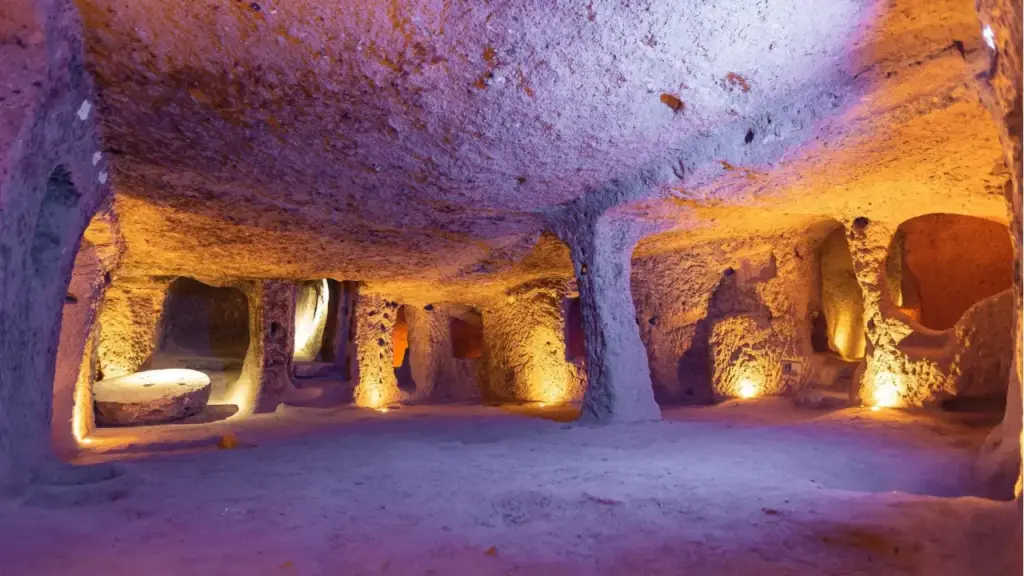
There were rooms,Corridors,Storage chambers, Stables,Wells,Ventilation shafts, Places of worship, A school And enormous circular stones that could be rolled across passages to prevent unwanted visitors from entering.
The deeper archaeologists explored, the less the place resembled a cave.
It looked like a city.
But not a city built toward the sky.
A city built into the earth.
And almost immediately, one question became impossible to ignore:
Why would anyone build a city underground?
The City Beneath the City
Today, Türkiye’s Ministry of Culture and Tourism describes Derinkuyu as an underground complex reaching approximately 85 metres beneath the surface.
That is roughly the height of a modern building of around 25 storeys.
But Derinkuyu is not simply a deep hole.
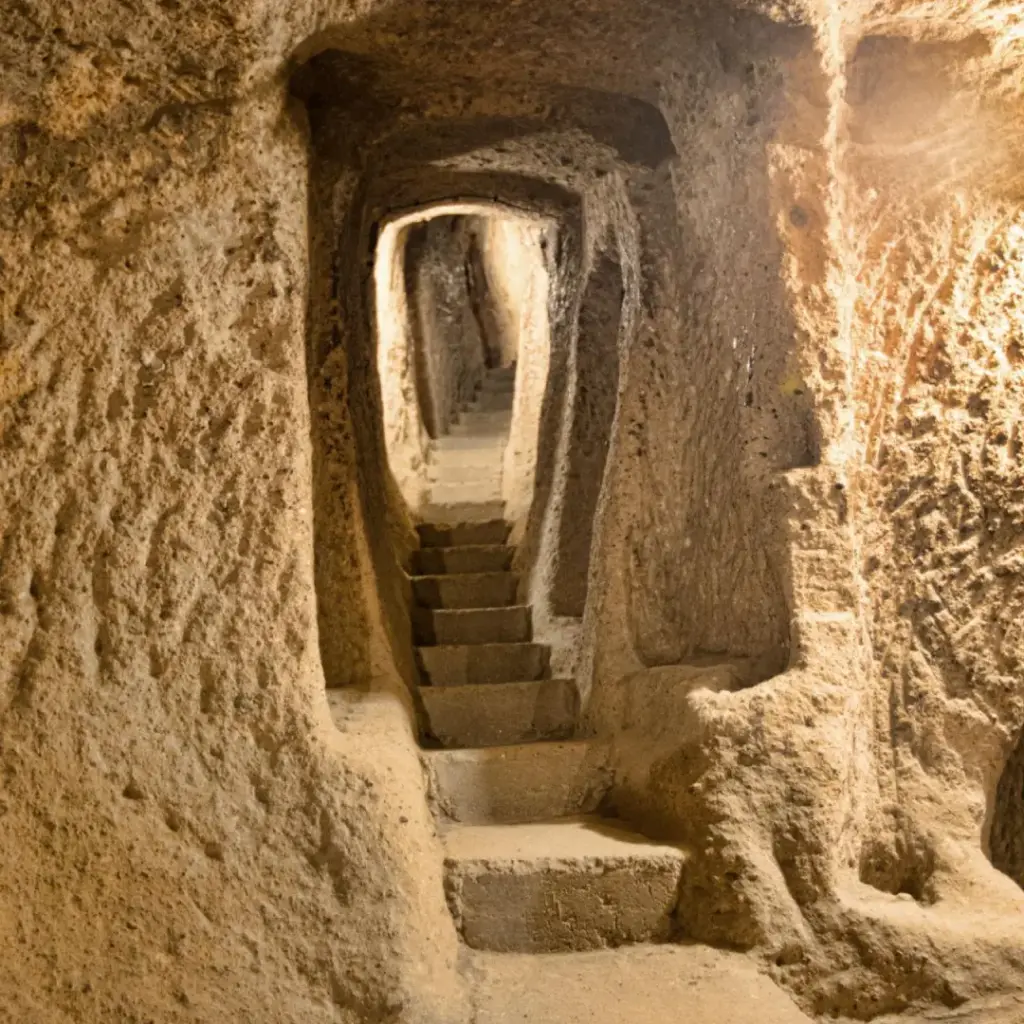
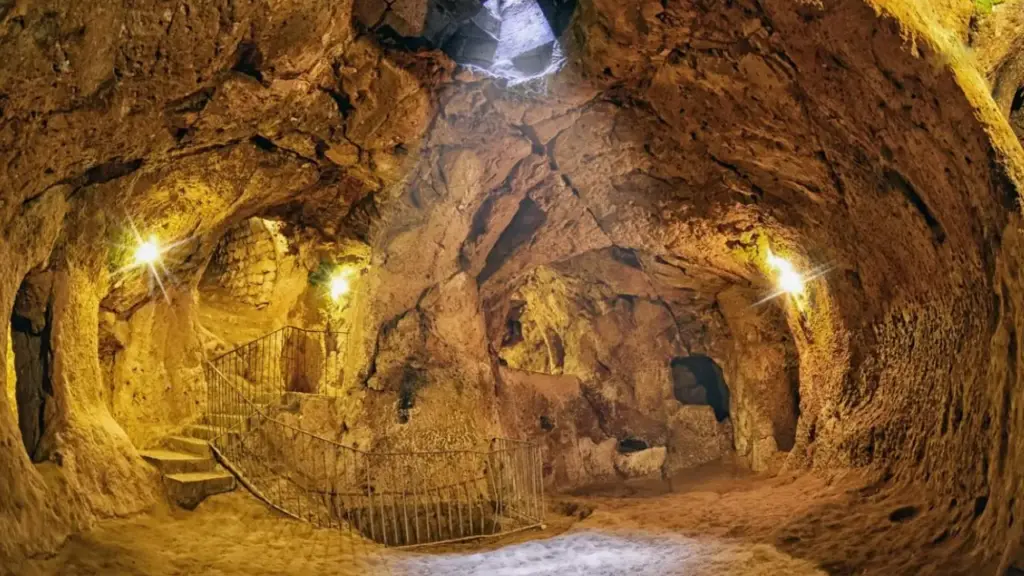
Imagine descending into the earth and finding a doorway.
Behind the doorway is another passage.
The passage turns.
Another staircase takes you lower.
Another room appears.
Then another.
The darkness seems to have no obvious end.
And that is the first thing that makes Derinkuyu extraordinary.
It is horizontal and vertical at the same time.
The settlement spreads through a network of interconnected spaces while also descending through multiple levels.
The exact number of rooms and levels has often been exaggerated online. Popular accounts sometimes describe “thousands of rooms” or a fixed number of underground floors, but official sources generally describe hundreds of rooms and extensive interconnected spaces.
The truth is impressive enough.
No exaggeration is necessary.
Imagine Living There
Now forget the modern tourist for a moment.
Imagine that you lived in Cappadocia many centuries ago.
Above you is the ordinary world.
The sun rises.
People work.
Animals graze.
Families cook.
Children play.
Then rumours arrive.
An army is approaching.
Perhaps the threat is real.
Perhaps nobody knows.
But your community has a plan.
People begin gathering supplies.
Animals are moved.
Food is carried underground.
People disappear through hidden entrances.
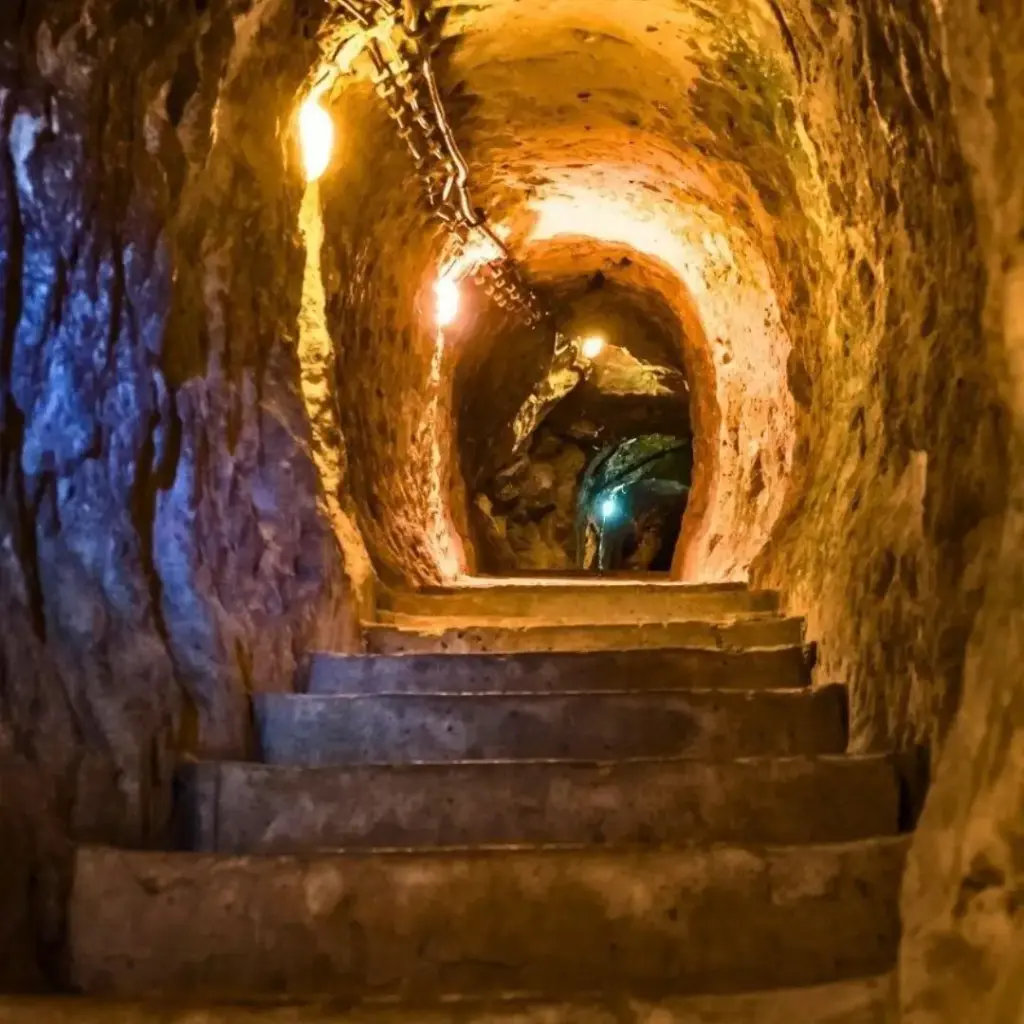
One by one, they descend.
The last person enters.
A huge stone is moved into position.
The passage closes.
Above ground, life appears to continue.
Below ground, an entire community is waiting.
This is the world Derinkuyu may have been designed to make possible.
The Secret Was Not Simply Hiding
The genius of Derinkuyu lies in a simple fact.
You cannot hide underground for very long unless you can solve several basic problems.
The first is air.
The second is water.
The third is food.
The fourth is security.
The fifth is space.
And Derinkuyu contains evidence of systems addressing all five.
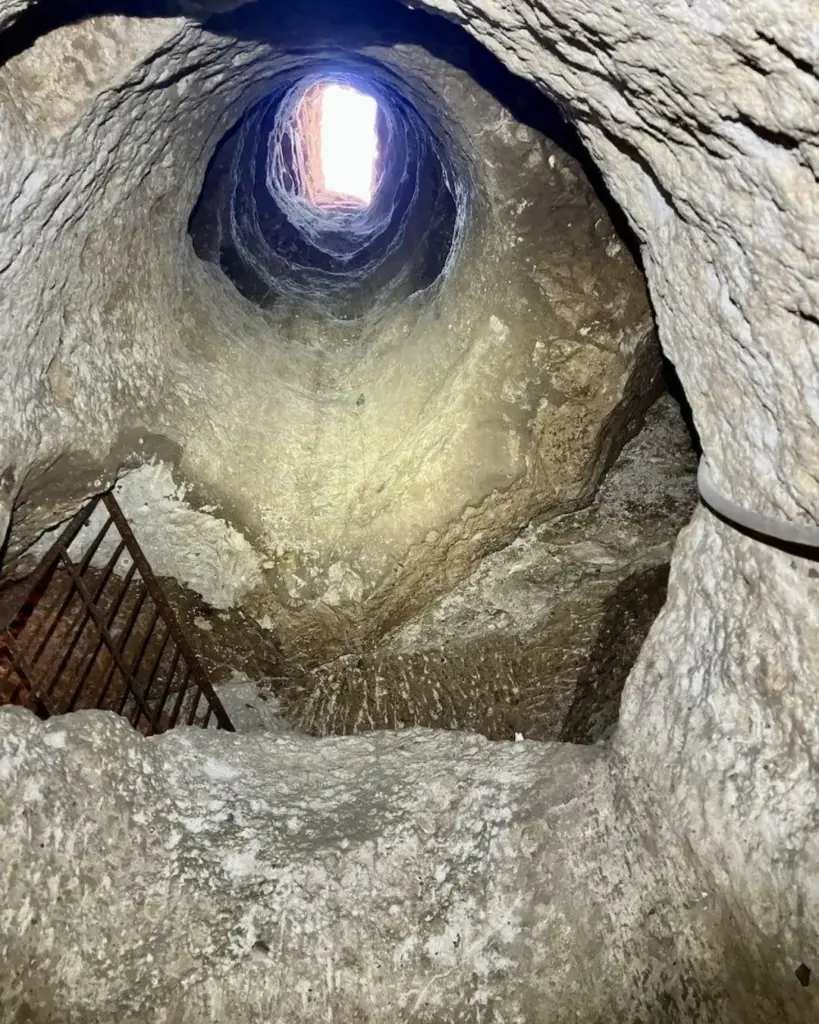
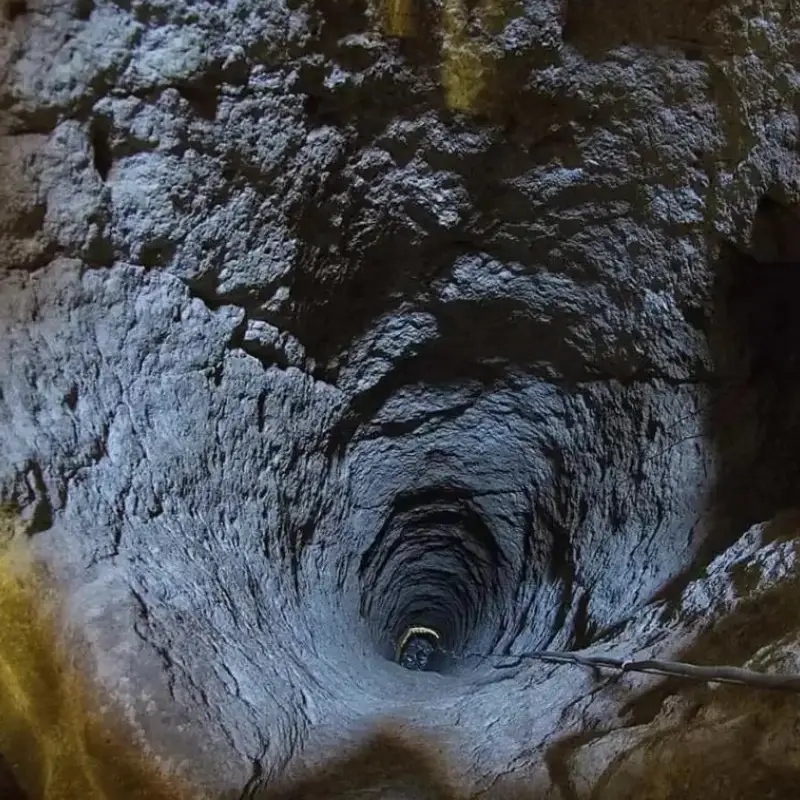
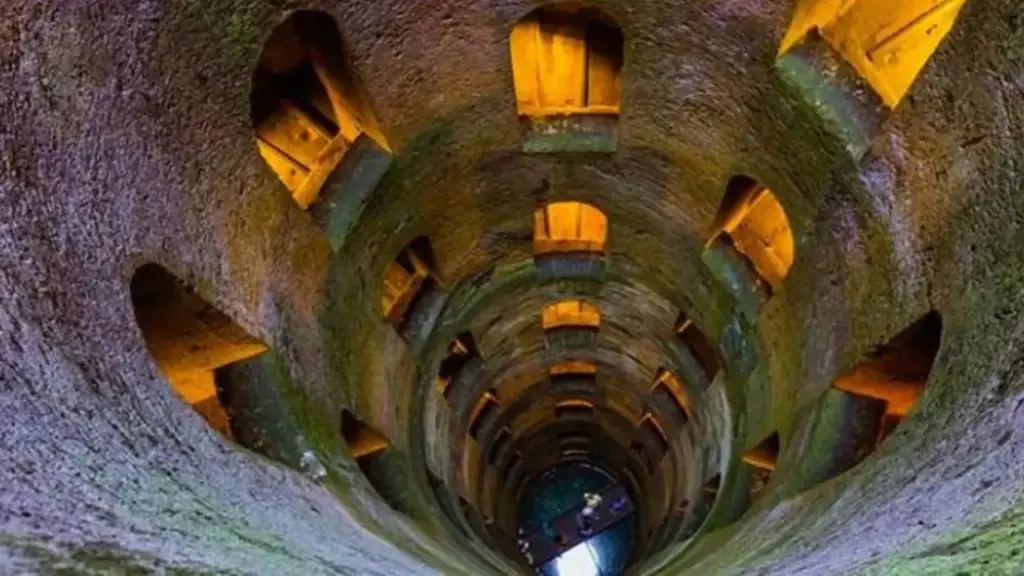
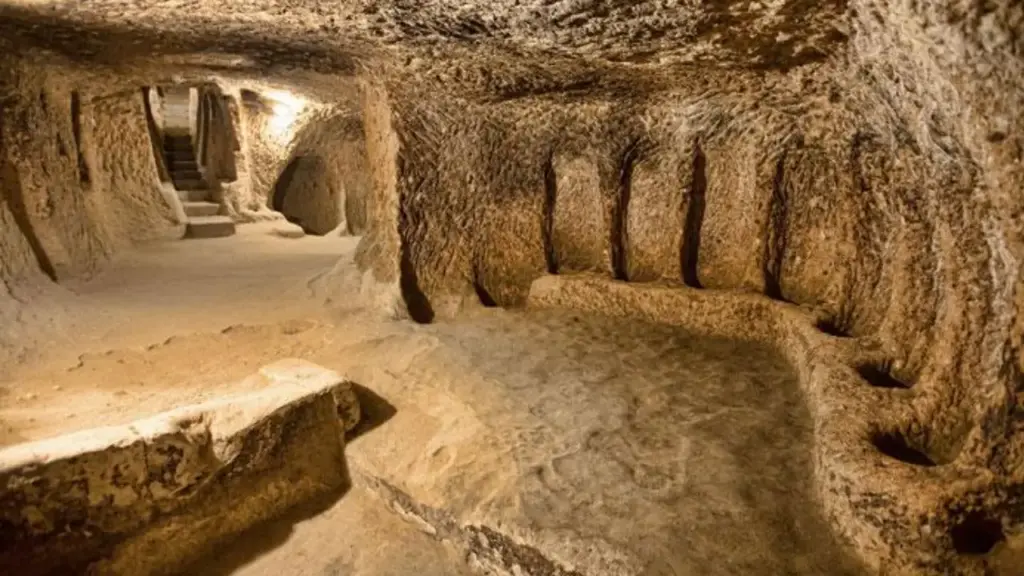
Ventilation shafts connected the underground environment with the surface.
One major shaft reaches approximately 55 metres and also served as a water source, according to Turkish official information.
Food could be stored.
Animals could be kept underground.
Kitchens and food-processing areas existed.
And the settlement contained large rooms capable of accommodating groups of people.
This is why Derinkuyu should not be imagined as an enormous collection of random tunnels.
It was an organised environment.
Someone had thought about what a community would need if it suddenly had to disappear from the surface.
Then There Were the Doors
Perhaps the most unsettling part of the journey is the stone doors.
They look almost absurdly simple.
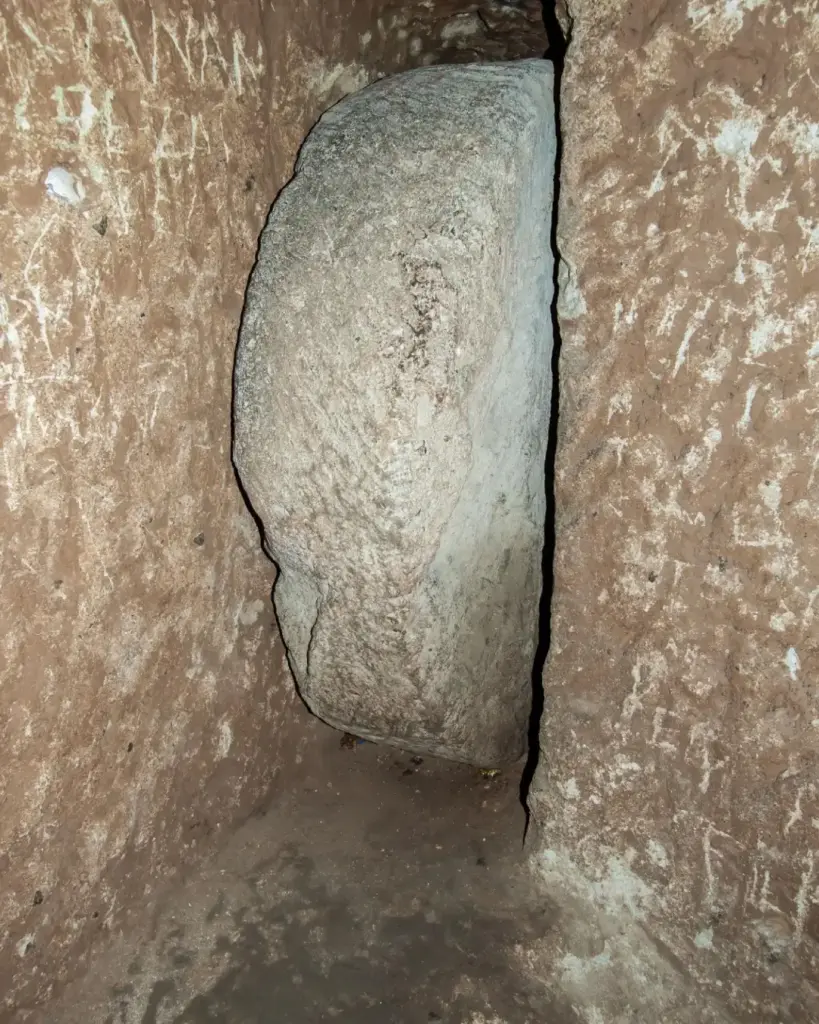
Large circular slabs of stone.
But their purpose was ingenious.
When danger approached, these stones could be moved into passages, creating barriers that were extremely difficult for an intruder to overcome.
Think about the military logic.
An invading army has hundreds or thousands of soldiers.
But underground, numbers become a disadvantage.
A narrow tunnel cannot accommodate an army.
Only a few people can move through it at a time.
And then there is the stone.
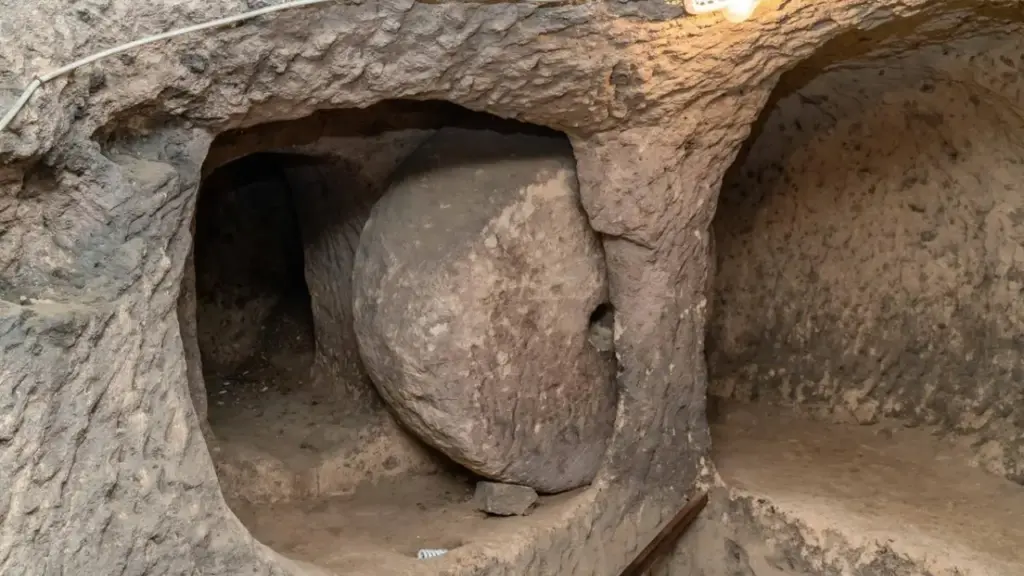
One barrier can stop the entire column.
The underground city therefore turned geography into defence.
The builders did not need high walls.
They did not need towers.
They did not need a large army.
They needed darkness, narrow passages and stone.
But Who Was Afraid Enough to Build It?
This is where the story becomes much more mysterious.
Because archaeologists still cannot simply point to one civilisation and say:
“They built Derinkuyu.”
The underground settlements of Cappadocia have been associated with different historical periods and communities.
Some theories connect early excavation with ancient peoples including the Hittites.
Later generations clearly modified and reused underground spaces.
Christian communities became particularly important in Cappadocia, and UNESCO recognises the underground settlements of the region as part of a landscape shaped by centuries of religious, cultural and political change.
So perhaps Derinkuyu was not created in a single moment.
Perhaps it was a project that grew with fear.
One generation carved a room.
Another extended a tunnel.
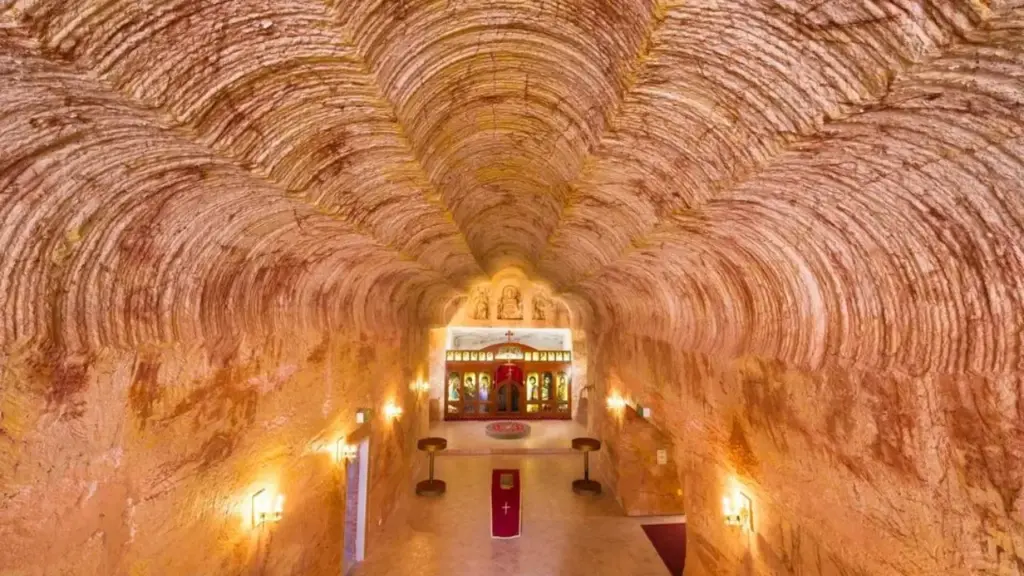
Another added a church.
Another improved a water system.
Another created a new defensive barrier.
Over centuries, the underground world became larger and more sophisticated.
The result was not the creation of one mysterious civilisation.
It was something potentially more fascinating:
a subterranean city continuously adapted by different generations to different dangers.
The Rock Was Already Waiting
There is another part of the mystery that comes from nature rather than humans.
Cappadocia is a volcanic landscape.
Ancient eruptions deposited huge quantities of volcanic material across the region.
Over time, these deposits became a relatively soft rock called tuff.
It could be carved far more easily than hard rock.
But when properly excavated, it could remain remarkably stable.
Nature had therefore provided the perfect raw material.
Humans supplied the purpose.
The result was an unusual partnership between geology and human ingenuity.
The volcanoes created the material.
The people created the city.
The Question of 20,000 People
Soon another extraordinary claim enters the story.
Could Derinkuyu have sheltered 20,000 people?
A peer-reviewed engineering study published in 2016 examined the underground city, including its construction and ventilation characteristics, and estimated that the complex could potentially accommodate up to around 20,000 people.
But this number needs to be handled carefully.
It does not mean archaeologists discovered evidence of 20,000 people living underground simultaneously.
There is no ancient census.
The number is a calculated estimate of possible capacity.
Still, even a much smaller population would have represented an extraordinary logistical achievement.
Imagine several thousand people underground.
Every person needs water.
Every person needs food.
Every person consumes oxygen.
Every person produces waste.
Animals require space.
Cooking produces smoke.
People need to move.
Children need places to sleep.
Communities need somewhere to gather.
Religious life continues.
And somehow, all of this had to function beneath the ground.
That is what makes Derinkuyu less like a collection of caves and more like an ancient experiment in underground urban engineering.
The Strange World Below
As archaeologists moved deeper, they found evidence of an astonishing variety of activities.
There were stables where animals could be sheltered.
There were storage areas where food could be kept.
There were kitchens.
There were spaces associated with wine and grape processing.
There were religious areas.
There was a missionary school.
There were wells.
There were ventilation shafts.
There were passages connecting different sections.
And deeper inside was a cross-shaped church, along with a water well and burial-related space.
That detail changes the atmosphere completely.
People were not merely hiding here.
They were attempting to preserve something resembling ordinary community life.
Even underground.
Even during danger.
Even in darkness.
Yet It Was Probably Not a Permanent Underground City
This is where the popular story needs another correction.
When we hear “underground city”, we imagine thousands of people living permanently beneath the surface.
That is probably too simplistic.
The archaeological evidence is more compatible with the idea that underground settlements served different purposes at different times, including refuge, storage and temporary occupation.
People could live above ground during normal conditions.
The underground world became a reserve environment.
When danger came, they descended.
This makes Derinkuyu resemble something surprisingly familiar.
A modern emergency shelter.
Only vastly larger.
And carved into the earth.
The Most Frightening Part Was Probably the Silence
Imagine the moment after the stone doors were closed.
No sunlight.
No normal street noise.
No view of the sky.
Only the sounds of people breathing, animals moving and footsteps echoing through stone corridors.
Somewhere above, an enemy might be searching.
Perhaps nobody knows how long the danger will last.
A day?
A week?
Longer?
The people underground have food.
They have water.
They have air.
They have shelter.
But they do not know when they can return.
This is why Derinkuyu is more than an architectural curiosity.
It is a physical record of fear.
Every tunnel raises the possibility of a threat.
Every storage room suggests preparation.
Every stone door suggests an enemy.
Every ventilation shaft suggests people expected to remain below for long enough for air to become a problem.
The architecture itself tells a story.
And Then Comes the Greatest Mystery
If Derinkuyu was built for survival, what exactly were people surviving from?
Raids?
Invasions?
Religious persecution?
Political instability?
Warfare?
There may not be one answer.
Cappadocia experienced repeated periods of conflict and political transformation over many centuries.
The underground settlements could therefore have served different communities at different times.
This is one reason historians are cautious about assigning a single date or purpose to the entire complex.
Derinkuyu may have been less like a building and more like a living system.
It changed when society changed.
The 10% That We Can See
And then there is a number that makes the mystery even more intriguing.
According to Turkish official sources, only around 10% of the underground complex is currently accessible to visitors.
That does not mean that 90% consists of a perfectly preserved secret city.
Some areas may be inaccessible for safety reasons.
Others may require archaeological research.
Some may be damaged.
Some may contain ordinary spaces rather than spectacular chambers.
But the fact remains that what tourists experience is only a limited portion of the archaeological landscape.
And this creates an irresistible question:
How much more can archaeology still learn from the darkness?
A single undiscovered room could reveal a tool.
A pottery fragment could help date a section.
A construction mark could reveal which generation expanded a tunnel.
A religious symbol could change our understanding of who used it.
The next discovery may not be spectacular.
It may simply be evidence.
And evidence is often more powerful than treasure.
Cappadocia’s Underground World Is Bigger Than Derinkuyu
Derinkuyu is famous, but it is not alone.
Cappadocia contains numerous underground settlements of different sizes.
Turkish cultural authorities have described approximately 150–200 underground settlements across the wider region, although the number varies depending on how researchers classify smaller underground structures.
Nearby Kaymaklı is another major underground settlement and, like Derinkuyu, is included within UNESCO’s Cappadocian World Heritage property.
Together they suggest that underground living was not an isolated experiment.
It was part of a broader regional response to geography and insecurity.
The people of Cappadocia had learned something that modern urban planners are rediscovering:
The ground beneath a city can itself become infrastructure.
An Ancient Lesson for the Modern World
There is something surprisingly modern about Derinkuyu.
Today, governments build underground command centres.
Cities build underground railways.
Companies operate underground data centres.
Countries maintain emergency shelters.
Engineers design resilient infrastructure.
Why?
Because civilisation is vulnerable.
Electricity can fail.
Transport can stop.
Supply chains can break.
Natural disasters can isolate communities.
War can transform cities within hours.
The people who developed Derinkuyu did not know modern engineering terminology.
But they understood the principle of redundancy.
If the surface becomes dangerous, have another place.
If ordinary food supplies disappear, store food.
If water is threatened, protect the wells.
If enemies approach, control the entrances.
If people must remain below, provide ventilation.
This is resilience engineering thousands of years before the phrase existed.
The Mystery of the Missing Builders
Perhaps the most haunting aspect of Derinkuyu is that we cannot hear the people who created it.
The walls remain.
The tunnels remain.
The stone doors remain.
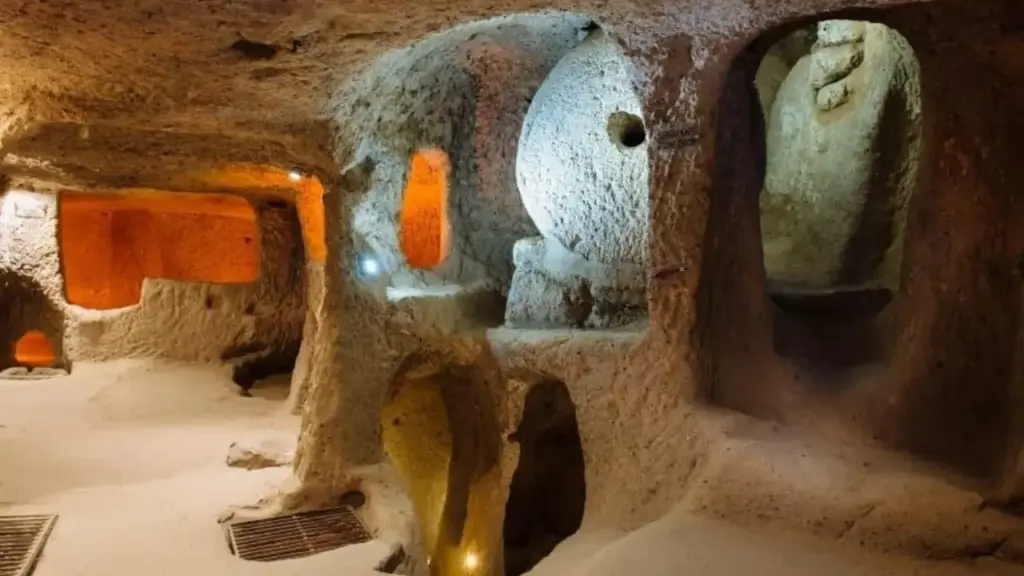
The wells remain.
But the builders are gone.
We do not know what the first excavators thought when they struck the rock.
We do not know how long they worked.
We do not know exactly how many generations expanded the city.
We do not know how many people descended during its most dangerous moments.
We do not know how many stories were told in those underground rooms.
Archaeology gives us architecture.
It gives us artefacts.
It gives us geological evidence.
But it rarely gives us the voices of ordinary people.
And that silence makes Derinkuyu feel mysterious.
So, Is It Really a City With Thousands of Rooms?
The answer is more complicated than the headline.
The 85-metre depth is real.
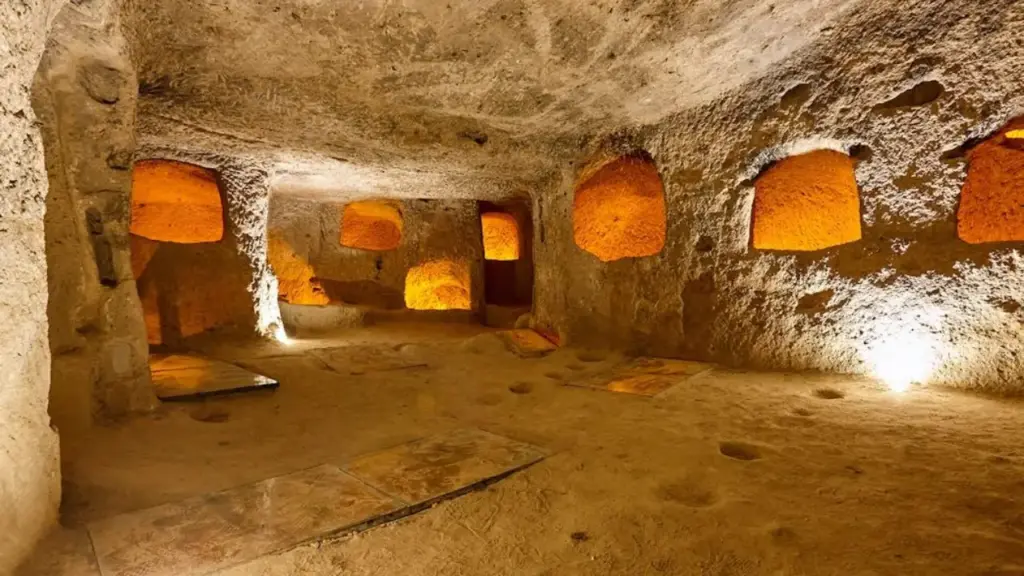
The extensive underground network is real.
The ventilation system is real.
The stone defensive doors are real.
The churches, storage areas, wells and animal spaces are real.
The possibility of accommodating thousands of people is supported by engineering analysis.
But the precise claim of “thousands of rooms” is not firmly established by official archaeological sources.
Nor is there proof that 20,000 people lived there simultaneously.
Nor can we confidently attribute the entire complex to one civilisation.
And that is precisely why the story is worth telling.
Because the truth is not less mysterious than the legend.
It is more mysterious.
The Crux Question
Eventually, every visitor must climb back toward the surface.
The darkness begins to disappear.
The passage becomes brighter.
Then comes daylight.
The sky suddenly seems enormous.
The air feels different.
You look around.
People are walking.
Cars are moving.
Life continues.
And beneath your feet is the place you have just left.
An underground world that was built by people who understood that the surface could not always be trusted.
We often think of ancient civilisations as people who built temples to reach the heavens.
Derinkuyu tells a different story.
Some people looked at the earth and chose to build downward.
They carved a world beneath the world.
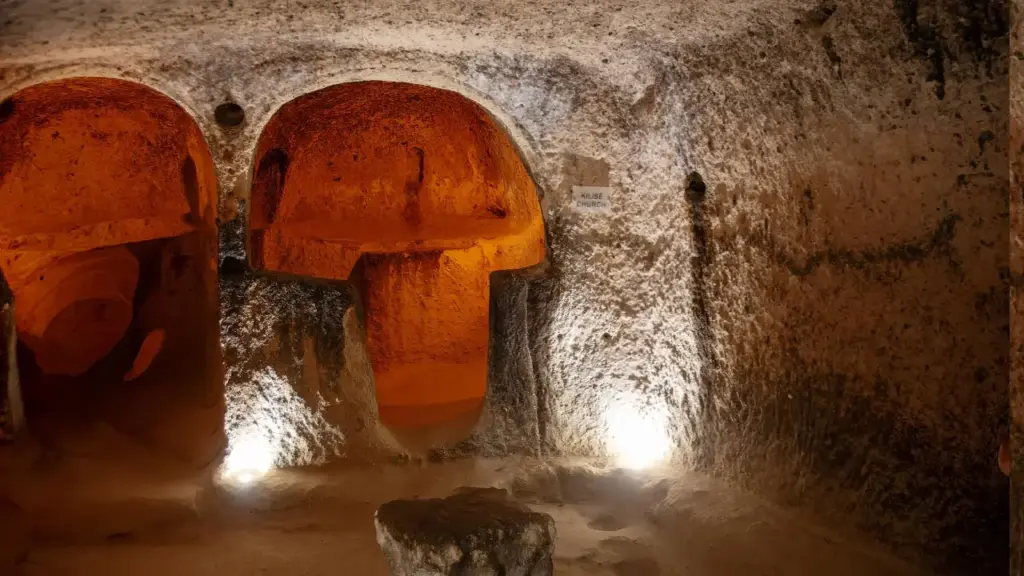
They created rooms without windows.
They created streets without sunlight.
They created doors that could disappear into stone.
They created a refuge so elaborate that, centuries later, we are still trying to understand it.
Perhaps the greatest mystery is not what lies beneath Cappadocia.
Perhaps it is what happened above it.
What did those people see coming that made them decide the safest place on Earth was underground?
And somewhere in the darkness beneath Cappadocia, that question remains unanswered.
Derinkuyu tells us that people once went underground to escape the world above. The real mystery is what made them so afraid of that world.
The Numbers Behind the Mystery
| Fact | Reliable figure / interpretation |
| Approximate depth | 85 metres |
| Major ventilation shaft | About 55 metres |
| Estimated potential capacity | Up to ~20,000, according to engineering research |
| Currently accessible | About 10%, according to Turkish official information |
| Underground settlements in wider Cappadocia | Approximately 150–200, depending on classification |
| UNESCO inscription | 1985 |
| Modern rediscovery | 1963 |
| Opened to visitors | 1965 |
Authentic Sources
Türkiye Ministry of Culture and Tourism — Derinkuyu Underground City
Turkish Museums — Derinkuyu Underground City
UNESCO — Göreme National Park and the Rock Sites of Cappadocia
UNESCO — Cappadocia Maps and Documents
Peer-reviewed engineering study of Derinkuyu Underground City







Leave a Reply