
There was no red telephone.
No president was watching.
No ambassador was negotiating.
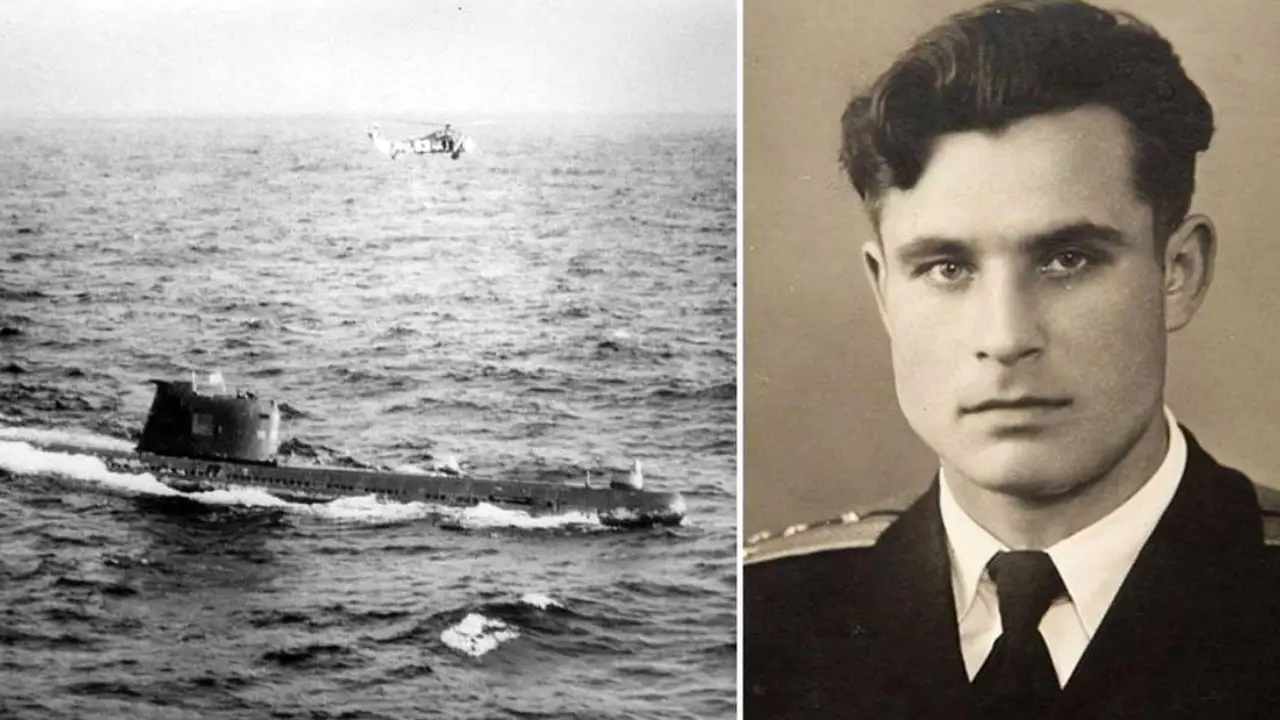
No one aboard the Soviet submarine B-59 could see the White House, the Kremlin or the map of the world.
They were several metres beneath the Atlantic, inside a steel tube that had become unbearably hot. The batteries were nearly exhausted. The air was foul. Men were fainting. American ships were closing in. Aircraft were circling overhead. Explosions were hammering the hull.
And the men inside the submarine did not know whether those explosions meant “come to the surface” or “you are under attack.”
That distinction mattered enormously.
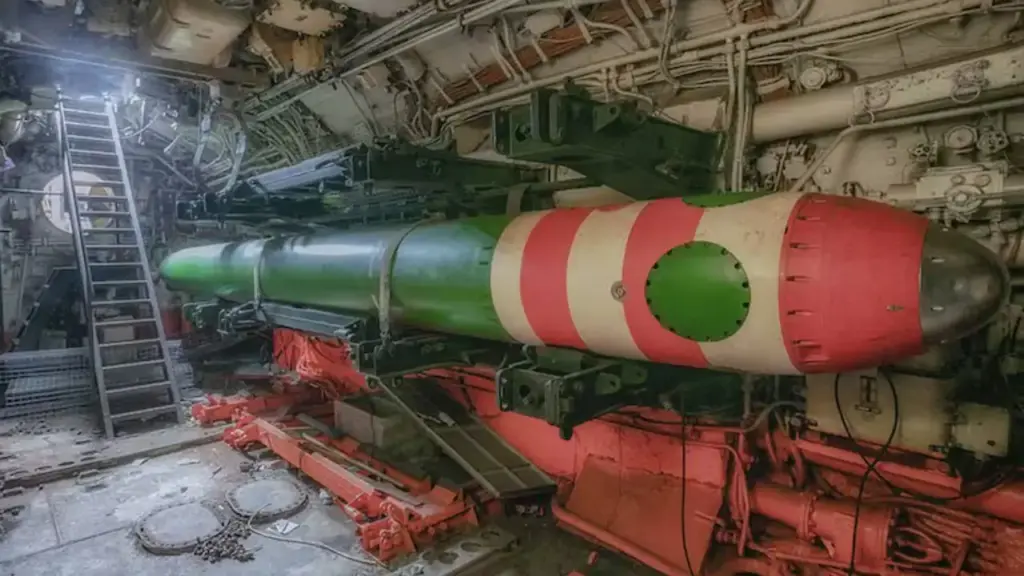
Because hidden inside B-59 was a nuclear-armed torpedo.
On 27 October 1962, the most dangerous day of the Cuban Missile Crisis, the Soviet submarine’s commander, Valentin Savitsky, came close to using it.
One of the senior Soviet officers aboard, Vasily Arkhipov, opposed the course.
The torpedo stayed inside the submarine.
The submarine surfaced.
And history continued without a nuclear detonation.
It is tempting to stop there and call Arkhipov the man who saved the world.
But that makes the story smaller, not larger.
The real mystery is more disturbing:
How did the world’s most dangerous confrontation become dependent on a handful of exhausted men who did not possess enough information to understand what was happening around them?
That is the story of B-59.
And it is a story not merely about courage, but about the terrifying gap between what governments know and what the people carrying out their orders actually know.
The Mission Nobody Was Supposed to Know About
In October 1962, the world was already standing beside a nuclear precipice.
The Soviet Union had secretly placed nuclear missiles in Cuba, just 90 miles from the United States. Washington discovered the missile sites through U-2 reconnaissance photography on 14 October. President John F. Kennedy was informed on 16 October. On 22 October, he publicly announced a naval “quarantine” of Cuba.
The crisis is usually told as a duel between Kennedy and Soviet leader Nikita Khrushchev.
But beneath the diplomatic drama, another operation was unfolding.
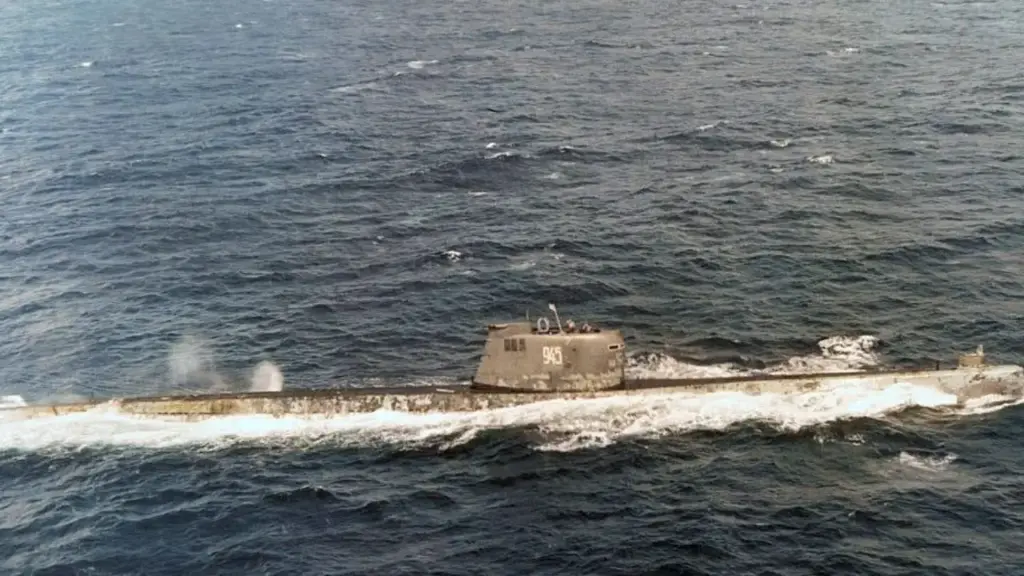
On 1 October 1962, four Soviet Foxtrot-class diesel-electric submarines left the Kola Peninsula as part of the Soviet operation supporting the Cuban deployment.
They were:
| Submarine | Commander |
| B-4 | R. Ketov |
| B-36 | A. Dubivko |
| B-59 | Valentin Savitsky |
| B-130 | N. Shumkov |
A Soviet naval report prepared after the mission records that each submarine carried 21 conventional torpedoes and one nuclear torpedo.
That detail changes the entire story.
The Americans hunting the submarines did not know they were hunting nuclear-armed boats.
And the Soviet crews did not know exactly what the Americans knew.
That is the first crack in the system.
Four Submarines Against an Ocean
The Foxtrots were diesel-electric submarines, not magical underwater machines capable of remaining indefinitely beneath the sea.
Their batteries eventually had to be recharged.
That meant surfacing or coming close enough to the surface to ventilate and recharge while an American anti-submarine force was searching for them.
The Soviet boats had crossed the Atlantic in secrecy and eventually reached the Sargasso Sea east of Cuba.
By then, the situation had become ugly.
A Soviet Northern Fleet report later described the American search force as vastly larger than the four submarines it was trying to locate. The report says the US employed more than 200 combat surface ships, up to 200 maritime patrol aircraft, and carrier-based anti-submarine groups.
The Soviet submarines were therefore attempting something extraordinarily difficult:
hide a handful of aging diesel boats in an ocean increasingly filled with American sensors, aircraft and warships.
One submarine was discovered.
Then another.
B-59 was eventually surrounded.
The trap was tightening.
Inside B-59, the Ocean Was Becoming the Enemy
The most frightening part of the B-59 story may not have happened outside the submarine at all.
It happened inside.
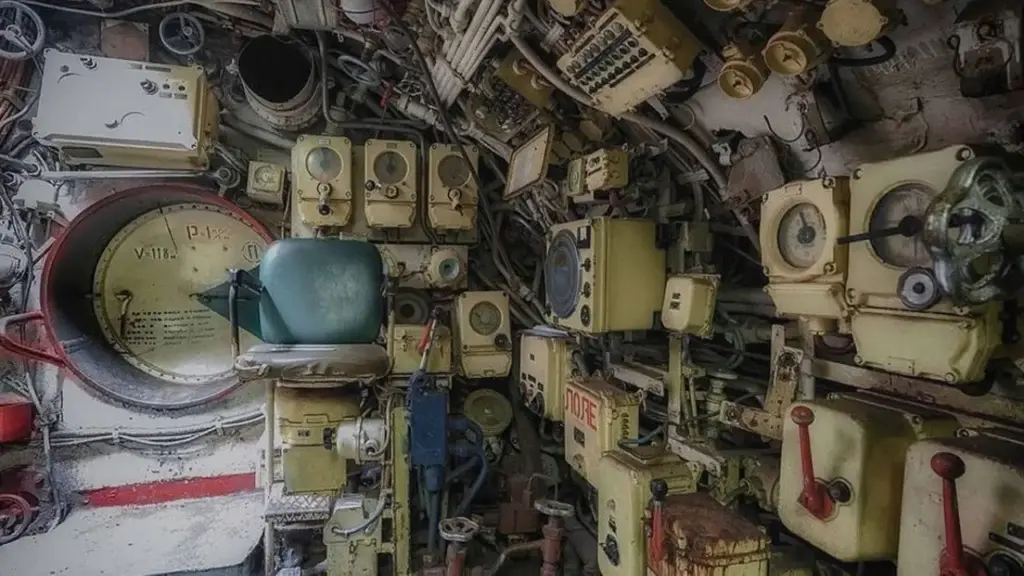
These submarines had not been designed for prolonged operations in tropical conditions. The Soviet post-operation report describes temperatures at some combat stations reaching 50–60°C. Fresh-water supplies were so limited that the crews could receive only about 250 grams per person per day, even while suffering severe dehydration. The report also describes heat exhaustion, fainting and widespread skin problems caused by the inability to wash.
Vadim Orlov, a signals-intelligence officer aboard B-59, later described temperatures reaching 45–50°C in compartments and around 60°C in the engine room. He recalled carbon dioxide levels becoming dangerously high and officers collapsing.
This matters because the popular version of the story sometimes treats the nuclear decision as if it happened in a calm control room.
It did not.
It happened in a submarine where men were exhausted, dehydrated, overheated and struggling to breathe.
The machine itself was deteriorating.
Salt had blocked diesel coolers. Rubber seals had failed. Electric compressors had broken down. Batteries were nearly depleted.
And then came the American ships.
The Explosions That Were Not Supposed to Start a War
The American Navy wanted the submarines to surface.
But the Americans did not know that B-59 carried a nuclear torpedo.
To signal Soviet submarines, American forces used practice depth charges and other signalling measures intended to force them to identify themselves.
From the American perspective, this was controlled signalling.
From inside B-59, it sounded very different.
The Soviet post-mission documentation records that American destroyers manoeuvred close to the submarine, aircraft flew over it and explosive devices were used. The Soviet account says B-59 was subjected to repeated pressure as American forces attempted to force it to the surface.
Orlov’s description is unforgettable: being inside B-59 felt like sitting in “a metal barrel” repeatedly struck by a sledgehammer.
Imagine the information available to a man inside that barrel.
He cannot see the Pentagon.
He cannot hear Kennedy’s speeches.
He cannot read Khrushchev’s messages.
He cannot know whether American ships have orders to destroy him.
He hears explosions.
His submarine is being surrounded.
His batteries are failing.
His crew is collapsing.
And he has a nuclear weapon.
This is where the story stops being merely historical.
It becomes a study in human decision-making under uncertainty.
Black Saturday
27 October 1962 was already spiralling out of control.
An American U-2 reconnaissance aircraft was shot down over Cuba, killing Major Rudolf Anderson Jr.
Another U-2 accidentally strayed toward Soviet airspace.
In Washington, American officials were discussing increasingly serious military options.
President Kennedy was under immense pressure. The US military was preparing for possible escalation, including invasion plans. The Kennedy Library’s records show that on the evening of 27 October the administration was still discussing reconnaissance, military preparations and the possibility of attacking Soviet installations in Cuba.
And somewhere beneath the Atlantic, B-59 was having its own crisis.
The two crises were connected.
But the people inside the submarine could not see the connection.
That was the nightmare.
Then the Nuclear Torpedo Was Prepared
According to Vadim Orlov’s later recollection, the situation aboard B-59 became so severe that Captain Valentin Savitsky believed war might already have begun.
He ordered the nuclear torpedo to be prepared.
The surviving testimony does not give us a perfect recording of the conversation. There is no cinematic transcript waiting in a Soviet archive.
That distinction matters.
Much of what we know about the precise exchange comes from retrospective testimony collected decades later.
But the underlying fact is much harder to dismiss: B-59 carried a nuclear torpedo, the captain came close to using it, and the weapon was not fired.
Orlov’s account says Savitsky became furious after losing contact with the Soviet General Staff and considered the possibility that the war had already begun. He wanted to respond rather than allow the submarine to be destroyed without fighting back.
Then Vasily Arkhipov entered the centre of the story.
Not as a superhero.
As a senior officer who understood that the situation might not be what it appeared to be.
Who Was Vasily Arkhipov?
Arkhipov was not the captain of B-59.
He was chief of staff of the Soviet 69th Submarine Brigade and happened to be aboard the submarine. Soviet documentation confirms his position and identifies Savitsky as B-59’s commander.
That accident of personnel may have mattered enormously.
Arkhipov had another reason to understand how quickly a nuclear emergency could become a human catastrophe.
In July 1961, he had been involved in the disaster aboard the Soviet submarine K-19, where a reactor coolant failure created a severe nuclear emergency. Eight crew members died in the immediate aftermath, with additional deaths later associated with radiation exposure.
But we should resist another tempting historical shortcut.
It is impossible to prove that Arkhipov thought, “I remember K-19, therefore I must stop this.”
History does not give us that sentence.
What we have instead is behaviour.
He did not agree to the launch.
He challenged the interpretation of the situation.
And the submarine eventually surfaced.
Did Arkhipov Really “Save the World”?
This is where the mythology needs to be separated from the evidence.
The popular story says three senior officers were involved in the decision and that two supported launching the nuclear weapon while Arkhipov voted against them.
That formulation is memorable.
It is also too neat.
The available documentary record does not give us a contemporaneous recording of a formal three-person vote. Arkhipov’s own 1997 account, which is the only known public statement by him about the incident, actually downplays his personal role. He described the commander as being shocked and disoriented by the American actions and explained how, once the situation became clearer, it was apparent that the Americans were signalling rather than attacking.
Later testimony from surviving officers gives a stronger account of Arkhipov’s intervention.
The safest historical conclusion is therefore this:
Arkhipov was a decisive restraining influence at the critical moment, but the exact mechanics of the decision should not be turned into a perfectly documented “three-man vote” when the evidence does not support that level of certainty.
That actually makes the story more interesting.
Because the mystery is no longer:
Did one man press a giant red button?
It becomes:
How much influence can one person exert when an entire system is moving toward the wrong conclusion?
The Most Dangerous Weapon Was Not the Torpedo
The nuclear torpedo was terrifying.
But the deeper danger was misinterpretation.
The Americans thought they were signalling.
The Soviets feared they were being attacked.
Washington did not know that the submarines carried nuclear weapons.
The submarine crew did not know whether Washington intended to destroy them.
Moscow’s orders could take hours to reach forces operating in the region, and Soviet documentation records serious communications interference. The Northern Fleet report says American interference contributed to delays in receiving Soviet orders ranging from several hours to as much as a day.
This is the central lesson of B-59.
A weapon does not have to malfunction to create catastrophe.
The humans interpreting the situation can malfunction.
Kennedy and Khrushchev Were Not Seeing the Same War
The Cuban Missile Crisis is often presented as a brilliantly managed confrontation between two leaders.
There is truth in that.
Kennedy and Khrushchev eventually found a path away from war. The US agreed to a public non-invasion commitment concerning Cuba, while a secret understanding also involved the eventual removal of American Jupiter missiles from Turkey.
But the archival record shows how incomplete the information available to decision-makers actually was.
American officials did not know the full extent of Soviet nuclear deployments in Cuba.
They did not know the submarines carried nuclear torpedoes.
They did not fully understand the authority Soviet forces had to use nuclear weapons in certain circumstances.
And the people closest to the danger often knew even less than the leaders.
This is why the B-59 story changes our understanding of the crisis.
The crisis was not one single chessboard.
It was a collection of smaller, partially disconnected games being played by people who did not possess the same map.
The Extraordinary Paradox of Nuclear Deterrence
Nuclear deterrence is supposed to prevent war by making the consequences of war unbearable.
But B-59 reveals the paradox.
For deterrence to work, both sides must understand what the other side is doing.
If a signal is mistaken for an attack, deterrence can suddenly become escalation.
The American depth charges were intended to communicate:
Surface. Identify yourself.
The Soviet crew could interpret them as:
We are attacking you.
Between those two meanings sat a nuclear weapon.
That is the frightening part.
The system did not fail because somebody wanted nuclear war.
It nearly failed because people could not reliably communicate what they were doing.
Why Did the World Hear About Arkhipov So Late?
The submarine returned to Soviet control.
The torpedo remained unfired.
No nuclear explosion occurred.
And therefore, for decades, almost nothing happened.
This is one of the strangest features of the story.
History is good at remembering things that happen.
It is much worse at remembering things that almost happen.
A nuclear explosion would have produced photographs, casualties, emergency meetings and a historical date taught to generations.
A nuclear explosion that never happened produced silence.
Arkhipov’s own recollection was presented in Moscow in 1997. Broader attention followed the 2002 Havana conference on the 40th anniversary of the crisis, where Soviet veterans and researchers discussed the underwater confrontation in much greater detail.
The absence of the event helped erase the man who helped prevent it.
There is an irony here.
The better Arkhipov succeeded, the less historical evidence the world had of what he had prevented.
The 1962 Information Gap
| Question | What B-59’s crew knew | What they did not know |
| Were they being attacked? | American forces were surrounding them | Whether destruction had been ordered |
| What were the explosions? | Explosions were striking near the submarine | Their precise purpose |
| What was Moscow saying? | Communication was severely limited | The latest strategic decisions |
| What did America know? | American forces were clearly hunting them | That the Americans did not know about the nuclear torpedo |
| Had general war begun? | It appeared possible | The broader diplomatic situation |
| What would happen after a nuclear launch? | Almost impossible to predict | The American political and military response |
This table is the real heart of the story.
Not the torpedo.
Not the hero.
The information gap.
The Counterfactual Nobody Can Prove
Would firing the nuclear torpedo have caused World War III?
Probably? Possibly? Certainly?
None of those words is strong enough to establish a historical fact.
A nuclear strike against American naval forces would almost certainly have caused an extraordinary military crisis.
American commanders would have faced enormous pressure to respond.
Soviet forces could have retaliated.
The political leadership in Washington and Moscow might have lost control of events.
But historians cannot honestly reconstruct the entire chain of decisions that would have followed.
This is precisely where sensational versions of the Arkhipov story go too far.
Saying “Arkhipov prevented a nuclear launch” is defensible.
Saying “Arkhipov personally prevented World War III” is an interpretation.
Saying “one nuclear torpedo would certainly have killed hundreds of millions and ended civilisation” goes beyond what the B-59 evidence can establish.
The uncertainty is not a weakness in the story.
It is the point.
When nuclear weapons are involved, we should be deeply uncomfortable with systems whose consequences become unknowable after the first irreversible step.
What Actually Saved the World?
Perhaps it was Arkhipov.
Perhaps it was Savitsky changing his mind.
Perhaps it was the signalling officer.
Perhaps it was the submarine’s inability to launch immediately.
Perhaps it was the fact that American commanders were using practice charges rather than lethal weapons.
Perhaps it was diplomacy in Washington and Moscow.
Perhaps it was all of these things.
And perhaps, as several historians and nuclear-risk scholars have argued, luck deserves a much larger place in the story than national mythology usually allows.
The official American record shows Kennedy resisting immediate military escalation even on Black Saturday. At the same time, Soviet and American forces were operating with major information gaps.
The Cuban Missile Crisis was therefore not simply a triumph of brilliant strategy.
It was also a demonstration of how easily strategy can become irrelevant when events move faster than information.
The Legacy: The Hotline Was Born From a Terrifying Lesson
One of the practical consequences of the crisis was the creation of the Washington–Moscow hotline in 1963.
Despite its famous nickname, the original hotline was not a red telephone sitting on the president’s desk. It was a secure communications system designed to allow messages to move much more rapidly between the two governments.
That distinction is more than trivia.
It tells us what the crisis taught its survivors.
When nuclear weapons exist, communication is not a convenience. It is part of the weapons-safety system.
The objective is not merely to give leaders more information.
It is to prevent local commanders from interpreting uncertainty as certainty.
The Ultimate Mystery
There is a haunting detail at the centre of the B-59 story.
The men inside the submarine were not trying to start a nuclear war.
They were trying to survive.
The Americans were not deliberately trying to trigger a nuclear exchange.
They were trying to force an unidentified submarine to surface.
Moscow was not ordering B-59 to launch a nuclear weapon.
But Moscow could not communicate reliably with the submarine.
Nobody had complete information.
And yet, for a few extraordinary minutes, the fate of a much larger world was entangled with the judgment of people inside a hot, cramped, exhausted submarine.
That is why Vasily Arkhipov matters.
Not because we can prove that he single-handedly saved every person who would later be born.
Not because history gives us a perfect transcript of his decisive words.
And not because the Cuban Missile Crisis was secretly the story of one forgotten hero.
He matters because B-59 exposes something far more uncomfortable than the hero narrative.
Civilisation can approach catastrophe without anyone consciously deciding to destroy it.
Sometimes all that is required is a frightened commander, an ambiguous signal, a broken communications link, a weapon waiting in a tube—and one person willing to say:
Wait. We may not understand what is happening.
That may be the most important lesson hidden beneath the Cuban Missile Crisis.
The world did not survive October 1962 because everyone understood the danger.
It survived partly because, at crucial moments, someone refused to act as though uncertainty were certainty.
And somewhere beneath the Atlantic, on the worst day of the Cold War, Vasily Arkhipov helped create that pause.
Timeline: The Crisis Beneath the Crisis
| Date | What happened |
| 1 October 1962 | Four Soviet Foxtrot submarines leave the Kola region for the Caribbean operation. |
| 14 October | A US U-2 photographs Soviet missile installations in Cuba. |
| 22 October | Kennedy publicly announces the naval quarantine. |
| 24 October | The quarantine becomes operational. |
| 27 October | Black Saturday: Major Rudolf Anderson is killed when his U-2 is shot down; B-59 is under intense American anti-submarine pressure. |
| 27 October | B-59’s exhausted crew faces the nuclear-torpedo crisis. |
| 28 October | Khrushchev agrees to withdraw Soviet missiles from Cuba. |
| 1963 | Washington–Moscow hotline is established. |
| 14 October 1997 | Arkhipov gives his known public account of the B-59 episode. |
| 2002 | Soviet veterans’ testimony brings the underwater episode into much wider public discussion. |
| 2022 | The National Security Archive publishes a major collection of declassified records and Arkhipov’s 1997 presentation in English. |
What the Evidence Lets Us Say—and What It Does Not
| Strongly supported | Requires caution |
| B-59 carried a nuclear torpedo. | The exact wording of the confrontation is uncertain. |
| Four Soviet submarines were deployed. | The famous “three-man vote” is a simplified reconstruction. |
| B-59 was subjected to intense US anti-submarine operations. | A launch cannot be assumed to have automatically produced global nuclear war. |
| The crew endured extraordinary heat, dehydration and equipment problems. | Arkhipov’s K-19 experience cannot be proven as the sole reason for his decision. |
| Savitsky came close to using the nuclear weapon according to retrospective testimony. | “Arkhipov saved the world” is a powerful interpretation, not a literal documentary finding. |
| Arkhipov played a crucial restraining role. | The exact sequence of authorization remains debated. |
Frequently Asked Questions
Was Arkhipov the captain of B-59?
No. Valentin Savitsky commanded B-59. Arkhipov was chief of staff of the 69th Submarine Brigade and was aboard as the senior brigade officer.
How many Soviet submarines were involved?
Four Foxtrot-class diesel-electric submarines—B-4, B-36, B-59 and B-130. Each carried one nuclear torpedo in addition to conventional torpedoes.
Did the Americans know B-59 had a nuclear torpedo?
No. The American forces tracking the submarine did not know the full nature of its armament.
Were the American depth charges intended to destroy B-59?
The US forces used signalling measures and practice charges to compel the submarine to surface. But from inside B-59, the distinction between signalling and attack was dangerously unclear.
Did Arkhipov definitely cast a deciding vote?
That is the popular version. The archival evidence supports his crucial intervention but does not provide a complete contemporaneous record of a formal three-person vote.
Did B-59 actually fire its nuclear torpedo?
No.
Why is Arkhipov famous today?
Because later testimony and declassified records revealed how close B-59 came to a potentially catastrophic nuclear incident, and how Arkhipov helped prevent the situation from escalating.
The Unfoldings
B-59 was not simply a story about a nuclear torpedo; it was a story about an information gap.
The submarine crew was exhausted, overheated, isolated and losing communication with Moscow.
American forces were trying to make the submarine surface, but the Soviet crew could not clearly understand whether the explosions were signals or an attack.
The Americans did not know B-59 carried a nuclear torpedo, while the Soviet crew did not know the full intentions of the Americans.
Captain Valentin Savitsky reportedly came close to preparing the nuclear torpedo for use.
Vasily Arkhipov played a crucial restraining role, although the popular story of a formal three-person “vote” is not firmly established by the documentary record.
The deeper lesson is that miscommunication and uncertainty can be as dangerous as the weapon itself.
The crisis demonstrates a disturbing weakness in nuclear deterrence: it works only when both sides correctly understand the other’s intentions.
The B-59 episode also shows how local commanders can face life-or-death decisions without access to the information available to national leaders.
Luck, restraint, technical circumstances, signalling and diplomacy all contributed to avoiding catastrophe.
The creation of the Washington–Moscow hotline in 1963 illustrates one practical lesson drawn from the crisis: rapid communication is part of nuclear safety.
Most importantly, catastrophe does not always require someone to deliberately choose it. An ambiguous signal, broken communication, fear and an irreversible weapon can be enough.
The world came frighteningly close to nuclear catastrophe not because someone wanted war, but because people trapped inside a submarine could not know what was actually happening outside it.
Sources and further reading
National Security Archive, George Washington University — The Underwater Cuban Missile Crisis at 60
Declassified documents, Soviet testimony and Arkhipov’s 1997 account
National Security Archive — Soviet Northern Fleet report on the submarine mission
Original translated Soviet operational report
National Security Archive — Vadim Orlov’s recollection of B-59
Firsthand retrospective account from a B-59 signals-intelligence officer
National Security Archive — Vasily Arkhipov’s 1997 presentation
Arkhipov’s own known public account
John F. Kennedy Presidential Library and Museum — 27 October 1962
Primary documents from Black Saturday
U.S. Department of State, Office of the Historian — Cuban Missile Crisis
Official historical overview of the crisis








Leave a Reply