
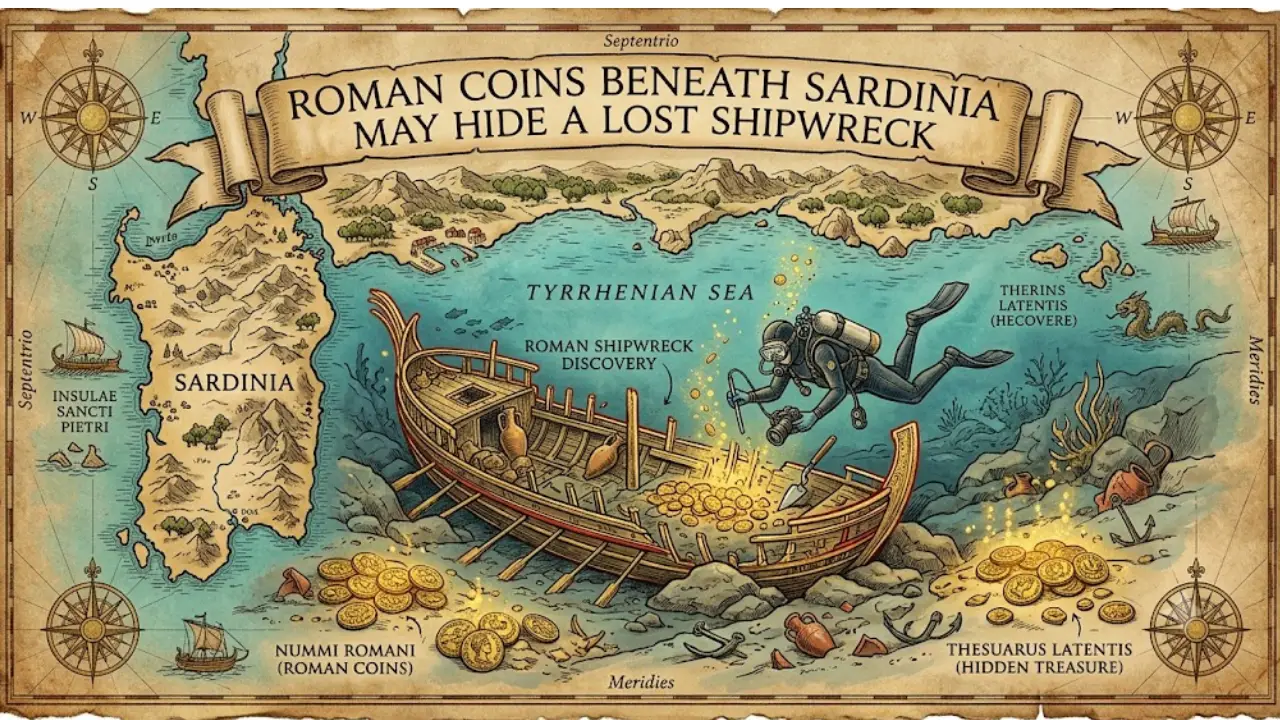
The Diver Saw Something That Should Not Have Been There
The Mediterranean has swallowed ships for thousands of years.
Most disappear completely.
Wood rots. Cargo breaks apart. Storms rearrange the seabed. Currents carry objects away. Sand covers whatever remains. After enough centuries, even a ship that once carried people, money and cargo can become almost indistinguishable from the landscape around it.
That is why what happened off the coast of Sardinia on 25 May 2023 is so unusual.
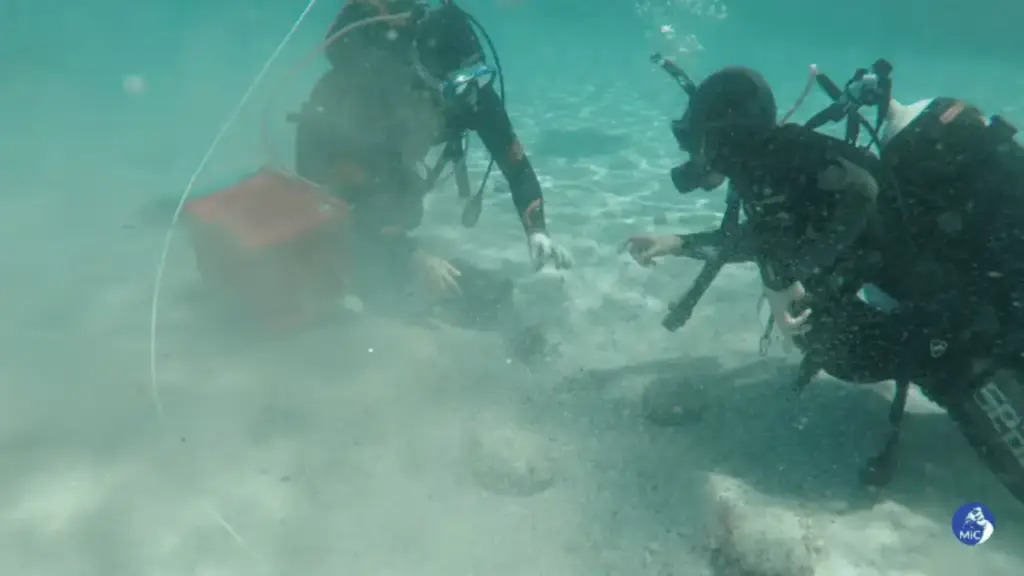
Davide Azara was diving near Capriccioli, in the Arzachena area, only about 100 metres from the beach and roughly three metres below the surface. At first, there was no obvious wreck. No great wooden hull. No dramatic anchor. No mast rising from the sand.
Instead, there was something much smaller.
A metallic object.
Then another.
And then the seabed began telling a story that had apparently been waiting for nearly seventeen centuries.
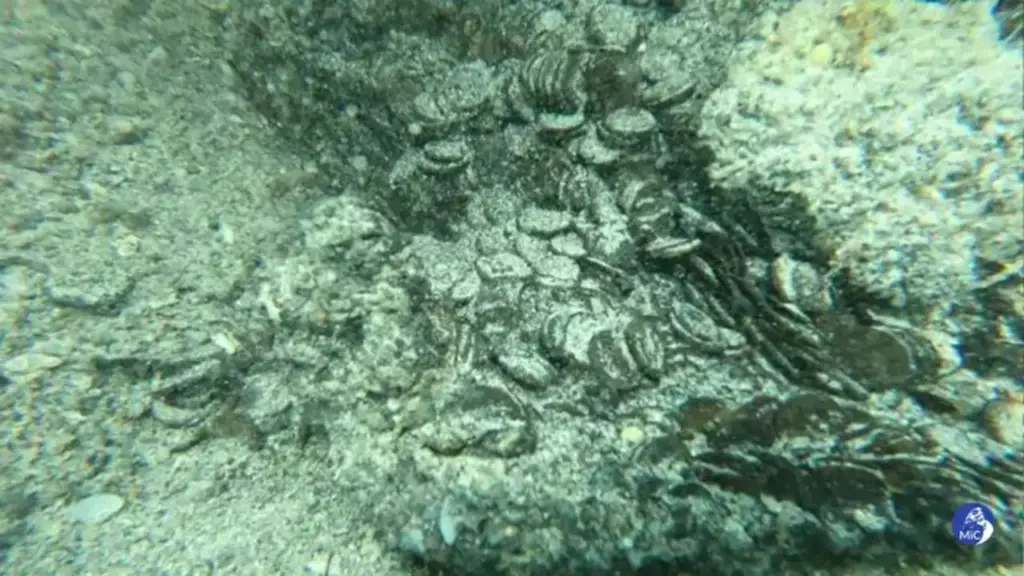
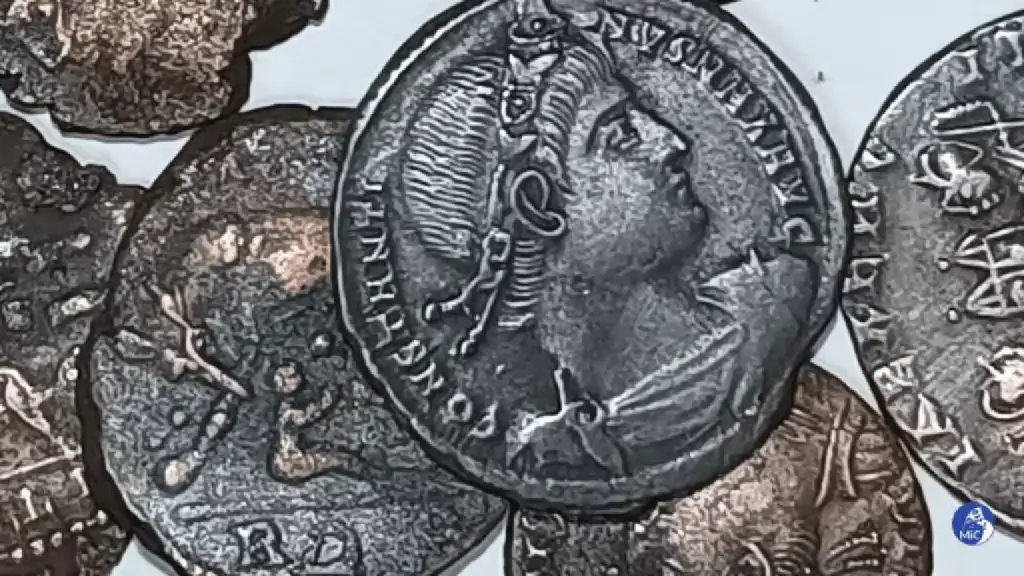
Investigators eventually estimated that the underwater deposit contained at least 30,000 Roman bronze coins and possibly as many as 50,000. The Italian Ministry of Culture called it one of the most important numismatic discoveries of recent years.
But here is the strange part.
The coins are there. The amphora fragments are there. The ship is not.
And that missing ship may be the most valuable part of the entire discovery.
A Fortune That Was Never Supposed to Be Found
Imagine standing on the Mediterranean seabed and seeing thousands of Roman coins scattered through the sand.
Not one.
Not a handful.
Not even a buried chest.
Tens of thousands.
The official estimate is deliberately expressed as a range because archaeologists have not published a definitive individual count of every coin. The safest description remains 30,000–50,000, rather than treating 50,000 as an exact number. Later research presentations have suggested a working estimate around 40,000, but the larger official range remains important.
The coins are mainly follis, bronze currency associated with the monetary system of the later Roman Empire.
They date broadly to the reigns and political era of Constantine the Great and his contemporaries, approximately the AD 324–340/345 period, depending on the classification used for the studied sample.
This was not an ordinary moment in Roman history.
The empire was changing.
Power had recently been violently consolidated. Constantine had defeated Licinius in AD 324. Monetary reforms were reshaping Roman currency. Ships were moving between Italy, North Africa, Sardinia and the wider Mediterranean.
And somewhere during that turbulent world, an enormous quantity of bronze money entered the sea.
We do not yet know why.
The First Mystery: Why Didn’t the Sea Destroy the Coins?
The Mediterranean is not a museum.
Saltwater is chemically aggressive. Metals corrode. Waves grind objects against one another. Marine organisms colonise surfaces. Sediment shifts.
Yet many of the Sardinian coins survived in what Italian authorities described as an exceptionally rare state of preservation.
The Ministry reported that only a tiny number of the initially examined coins were damaged, while most remained remarkably legible.
The likely explanation is not that the coins somehow resisted the sea.
It is that the seabed protected them.
The deposit was associated with sandy areas and Posidonia seagrass. Once coins become covered by sediment, their chemical environment can change dramatically. Burial can reduce exposure to oxygen and physical disturbance, creating a kind of accidental archaeological vault.
This produces one of archaeology’s great paradoxes:
The sea can destroy history but it can also preserve it.
The same sediment that hides a wreck from archaeologists may protect its contents for centuries.
And that leads to the next mystery.
If There Was a Ship, Why Can’t Anyone See It?
This is where the story stops being a treasure story and becomes an archaeological puzzle.
When people imagine a shipwreck, they imagine a ship lying on the seabed.
That is not necessarily what archaeologists find.
A vessel sinking in rough water can break apart before reaching the bottom. Its cargo can escape. Heavy objects can settle in one location while lighter objects travel elsewhere. Waves can repeatedly disturb the site. Sand can bury structural remains.
Over centuries, the wreck can effectively become a dispersed archaeological fingerprint.
The coins may have travelled.
The amphorae may have travelled differently.
The timber may have disappeared.
The anchor might lie somewhere else.
The seabed itself may have moved.
So the absence of a visible hull does not prove that there was no ship.
But it also does not prove that there was one.
That distinction is critical.
The Italian authorities identified two broad areas of coin dispersion and fragments of amphorae. The seabed morphology and the presence of seagrass raised the possibility that remains of a vessel could still be buried there. But public evidence available today does not establish a confirmed shipwreck associated with the hoard.
The mystery therefore remains genuinely open.
The Coins May Have Moved After the Ship Disappeared
There is another possibility that makes the site even more fascinating.
Perhaps archaeologists are not looking at the wreck’s original location at all.
Imagine a vessel sinking during a storm.
The hull breaks.
A container holding coins ruptures.
Some coins fall immediately.
Others are carried by waves.
Then storms return.
Sand moves.
Seagrass grows.
More sediment arrives.
Seventeen centuries later, archaeologists discover the final pattern.
That pattern is not necessarily a photograph of the sinking.
It is the result of 1,700 years of movement.
This is why underwater archaeologists care so much about spatial distribution.
Where was the densest concentration?
Which direction does the scatter extend?
Are heavier objects clustered together?
Are amphora fragments concentrated in the same area?
Does buried material continue beyond the visible coin field?
These questions can potentially allow researchers to work backward from the modern seabed toward the ancient event.
In other words, they are trying to reconstruct a shipwreck that may no longer look like a shipwreck.
Then the Amphorae Appeared
The coins provide the money trail.
The amphora fragments may provide the trade trail.
Investigators found fragments of narrow-necked amphorae associated with the coin deposit, including examples connected with African and eastern Mediterranean production.
That detail is enormously important.
An amphora was not simply an ancient clay pot.
It was the Roman world’s freight container.
Wine, oil and other commodities travelled in amphorae across the Mediterranean. Their shapes and ceramic fabrics can sometimes reveal where they were manufactured.
Suddenly the seabed begins to look less like a pile of coins and more like the remains of a journey.
Perhaps the vessel had been carrying goods.
Perhaps the coins were connected with commercial transactions.
Perhaps they represented payments or accumulated currency.
Perhaps several different economic activities were happening aboard the same ship.
We cannot yet know.
But the amphora fragments tell us that the site potentially belonged to a Mediterranean transportation system rather than an isolated local event.
Sardinia Was a Crossroads, Not an Island at the Edge
Modern geography can make Sardinia appear isolated.
For Rome, it was strategically placed.
The island sits between the Italian peninsula and North Africa, directly within the wider Mediterranean network.
Roman Sardinia was connected by maritime routes and roads linking important settlements and ports. Ancient Olbia, on the island’s northeast, occupied an especially advantageous position for maritime connections across the Tyrrhenian Sea. Archaeological investigations around Olbia have identified numerous underwater sites, demonstrating how heavily these waters were used over centuries.
So the coins found near Capriccioli were discovered in exactly the kind of environment where Roman ships could have passed.
That does not tell us which ship carried them.
But it makes a maritime explanation entirely plausible.
And it creates a tantalising question:
Was this vessel travelling toward Sardinia, away from it, or merely passing through?
Who Was Carrying Thousands of Roman Coins?
This may be the question people most want answered.
Who owned them?
A merchant?
A government official?
The army?
A wealthy landowner?
A banking or commercial operation?
Unfortunately, the coins cannot simply produce an owner’s name.
Their value lies elsewhere.
Numismatists can examine:
emperor portraits; inscriptions; mint marks; denominations; dates; metal composition;
wear; geographical distribution.
Together, these details can reveal how currency moved through the Roman economy.
The diversity of mints is particularly interesting because it suggests that the deposit was not simply a fresh shipment from one local mint.
The coins had potentially travelled through a much larger monetary system.
This is one reason the discovery matters beyond Sardinia.
It could help researchers understand how Roman money moved across the Mediterranean during a period of political and economic transformation.
The Date May Be More Important Than the Number
Fifty thousand coins sounds spectacular.
But archaeology is not an auction.
The historical value does not come simply from the quantity.
It comes from the context.
The coins broadly belong to the fourth century AD, a period when Constantine’s rise was transforming the Roman Empire.
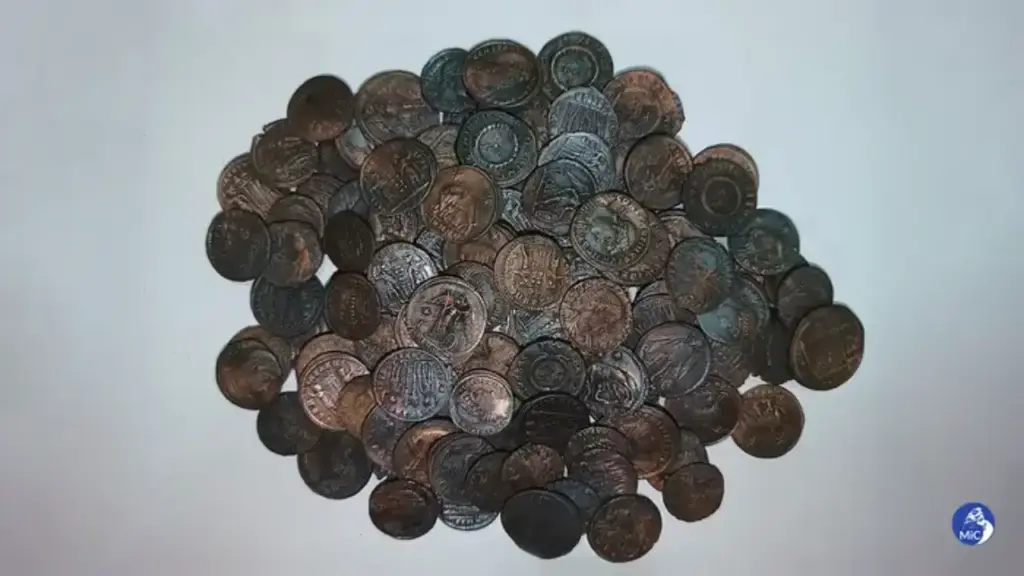
The follis itself was part of the monetary reforms introduced under Diocletian around AD 294. Over the following decades its size and weight changed, reflecting the evolution of Roman coinage and economic pressures.
The Sardinian deposit therefore acts almost like a sealed timestamp.
It gives researchers a concentrated sample of the currency circulating around a particular period.
And if the ship is eventually located, the value of that timestamp could multiply.
A hull.
An anchor.
Cargo.
Coins.
Amphorae.
Perhaps even inscriptions.
Together they could turn an anonymous hoard into the story of an actual voyage.
The Missing Ship Could Be Hiding in Plain Sight
There is an important reason archaeologists have not simply “found the wreck.”
The seabed can conceal objects remarkably well.
A ship may lie beneath layers of sand.
Timbers can decay while metal fasteners remain.
Structural pieces can be separated.
Seagrass can grow over archaeological material.
Modern storms can redistribute sediment.
And the wreck may be outside the obvious coin concentration.
This means the next stage of investigation is not necessarily another treasure hunt.
It is forensic mapping.
Archaeologists need to understand the entire archaeological landscape.
The location of every important object can become a clue.
The direction of amphora fragments.
The density of coins.
The thickness of sediment.
The distribution of metal.
The shape of the seabed.
Even the absence of objects can matter.
A wreck sometimes announces itself not through a spectacular visible hull, but through an unnatural concentration of objects that should not be together.
And Then the Treasure Story Took an Unexpected Turn
The coins created another mystery one involving the man who found them.
Azara did something important after the discovery.
He reported it.
He notified authorities and cooperated with archaeologists, Carabinieri and other personnel during the initial investigation and recovery work.
He later sought the archaeological discovery reward available under Italian cultural heritage law.
And that is where the story became controversial.
The reward system is designed for qualifying fortuitous discoveries.
But the authorities argued that Azara’s discovery did not meet that condition.
Why?
Because he had used a metal detector after noticing anomalies.
The issue was not simply whether he had acted responsibly after finding the coins. The legal question was whether the discovery itself was genuinely accidental.
In January 2026, the Regional Administrative Court of Sardinia (TAR Sardegna) rejected his appeal. The court considered the presence and use of the detector, together with the circumstances surrounding the discovery, sufficient to undermine the required element of fortuity. Importantly, the court did not establish that merely possessing a metal detector automatically eliminates every possible reward claim; its decision concerned the circumstances of this particular discovery.
The irony is difficult to miss.
The diver found an archaeological treasure.
He reported it.
He helped authorities recover it.
And yet, according to the court’s interpretation, his search method meant that the discovery was not “fortuitous.”
The Strange Economics of Archaeological Treasure
There is another misconception hiding inside stories like this.
People hear “50,000 Roman coins” and immediately think:
How much money are they worth?
Archaeologists ask a different question:
How much information are they worth?
An isolated Roman coin can be interesting.
A coin found beside an amphora fragment can be more informative.
A coin found inside a container on a ship can be extraordinary.
A complete ship carrying coins, amphorae, tools, food remains and inscriptions can become a time capsule.
That is why archaeological context can be more valuable than market price.
Once objects are removed without documentation, that context disappears forever.
A coin without its location is still a coin.
But a coin with a recorded position inside a shipwreck can become evidence about how people lived, travelled and traded.
What Happens to the Coins Now?
Finding the objects is only the beginning.
Recovered underwater artefacts need conservation because exposure to air can trigger deterioration processes that were slowed while they were submerged.
Researchers must clean, stabilise, catalogue and study the coins.
They must also document where objects came from.
The ultimate destination is normally public cultural heritage, not private treasure ownership.
UNESCO’s underwater heritage framework strongly emphasises preservation, documentation, conservation and scientific research, with preservation in situ generally preferred when appropriate.
Reporting in Italy has indicated that material from the hoard was being prepared for conservation and possible museum interpretation, although the complete treasure had not yet become a public exhibition as of the latest reporting reviewed for this article.
That delay is not necessarily bad news.
Archaeology moves slowly because mistakes cannot be undone.
Once a 1,700-year-old archaeological site is disturbed, nobody gets a second chance to excavate it.
The Seaton Comparison Makes the Discovery Even Stranger
There is a useful comparison.
In 2013, the Seaton Down hoard in England contained 22,888 Roman follis coins.
The Sardinian estimate of 30,000–50,000 therefore potentially represents roughly 1.3 to 2.2 times as many coins.
But quantity should not be confused with significance.
The Seaton hoard and the Sardinian deposit are archaeologically different.
One is a terrestrial hoard.
The Sardinian material is underwater and potentially connected to maritime transport.
If a ship is eventually discovered beneath the Sardinian seabed, the comparison will become much less about coin numbers and much more about reconstructing an ancient journey.
What If the Ship Is Found?
This is where the mystery becomes genuinely exciting.
Suppose archaeologists eventually detect timber beneath the sand.
Then an anchor.
Then hull fasteners.
Then a concentration of amphorae.
Suddenly the scattered coins acquire a possible owner not necessarily a person, but a vessel.
Researchers could investigate its construction and potentially determine whether it was built locally or elsewhere.
Amphorae could reveal the geographical origins of its cargo.
Coins could help establish the date of its final voyage.
Sediments could reveal how it sank.
The distribution of cargo could show how the vessel broke apart.
And perhaps, somewhere among the wreckage, an inscription could provide the clue nobody expected.
A ship’s name.
A merchant.
A military unit.
A destination.
Or nothing at all.
That uncertainty is part of the fascination.
The Sea May Be Holding the Missing Chapter
The most tempting conclusion is that thousands of coins must have come from a shipwreck.
But good archaeology resists tempting conclusions.
The evidence currently establishes a remarkable underwater coin deposit with associated amphora fragments and a plausible maritime context.
It does not yet publicly establish the wreck itself.
That distinction makes the story stronger, not weaker.
Because there is still something left to discover.
Perhaps the coins are the remains of a ship that broke apart nearby.
Perhaps currents transported them from another location.
Perhaps the vessel lies only metres beneath the sediment.
Perhaps it was completely destroyed.
Or perhaps the original explanation is something archaeologists have not yet considered.
That is the beauty of a genuine archaeological mystery.
The unanswered question is not a flaw in the story.
It is the story.
The Real Treasure Is Not Buried in the Coins
Nearly seventeen centuries ago, someone possessed these coins.
Someone manufactured them.
Someone transported them.
Someone used them.
Eventually, they entered the sea.
Then history went silent.
For more than a thousand years, nobody knew they were there.
Until a diver looked down.
What he found was not simply money.
It was a message from a vanished Mediterranean world.
The coins tell us that Roman currency was moving.
The amphora fragments suggest goods were moving with it.
Sardinia tells us the route was part of a wider maritime network.
The seabed tells us that objects can survive long after human memory disappears.
And the missing ship leaves the final question hanging beneath the water:
What happened on the last voyage?
Until archaeologists find the answer, the Roman coins of Sardinia remain more than an extraordinary hoard.
They are fragments of a journey whose beginning is known, whose cargo has resurfaced but whose final destination may still be buried beneath the Mediterranean sand.
The Unfolded Picture:
- 30,000–50,000 Roman bronze coins were estimated at the Sardinian site.
- The deposit dates broadly to the AD 324–340/345 period.
- The coins are unusually well preserved because seabed burial likely protected them from some forms of deterioration.
- Amphora fragments associated with the site point toward a wider Mediterranean commercial environment.
- No shipwreck has yet been conclusively identified as the source of the coins.
- Currents, storms and sediment movement could have separated the cargo from the original wreck.
- Sardinia occupied an important position in Roman Mediterranean maritime networks.
- The coins may reveal patterns of Roman monetary circulation rather than the personal wealth of a single individual.
- Diver Davide Azara reported the discovery and assisted authorities, but his reward claim was rejected after the court concluded the discovery was not sufficiently fortuitous.
- The greatest future discovery would be the ship itself, because it could transform an extraordinary hoard into a reconstruction of an actual Roman voyage.
Related Reading You may Like
Authentic Sources & Further Reading
- Italian Ministry of Culture — Official announcement of the Sardinian Roman coin discovery: Ministero della Cultura — Sardinia coin discovery
- Regional Administrative Court case and January 2026 reward decision: La Nuova Sardegna — TAR Sardegna decision
- Background and first-hand reporting on Davide Azara: La Stampa — Sardinian Roman coin discovery
- Reporting on the diver’s reward dispute: L’Unione Sarda — Davide Azara and the denied reward
- UNESCO — Underwater Cultural Heritage: UNESCO — Underwater Cultural Heritage
- SardegnaCultura — Roman archaeology and maritime heritage: SardegnaCultura








Leave a Reply