
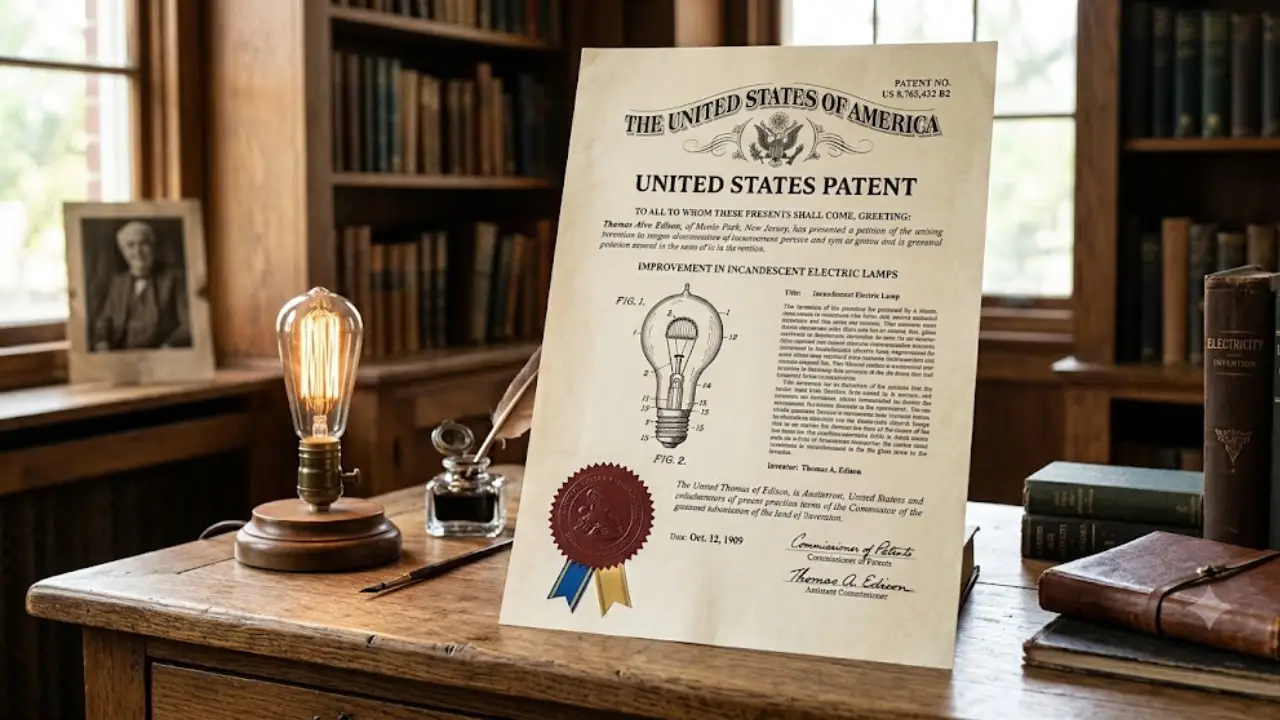
A patent database is a place where the future sometimes leaves a paper trail. Long before a product reaches a shop, a company may have filed documents describing a new battery chemistry, an unusual smartphone sensor, a more efficient medical device or a machine that does not yet exist outside a laboratory.
But there is a catch: a patent is evidence that someone has sought legal protection for an invention, not proof that the invention will become a successful product.
Learning to distinguish those two things is what makes patent research valuable. It allows curious readers, journalists, students, entrepreneurs and technology researchers to investigate what companies are exploring without confusing a technical possibility with a commercial promise.
This guide explains how to search patent databases, interpret difficult legal language, follow changes in ownership, identify meaningful patterns and build a simple technology roadmap using publicly available evidence.
Why patent databases can reveal technological directions
Patents exist because inventors and organisations want legal protection for technical ideas. In exchange, the invention must be disclosed to the public under the applicable patent system.
That disclosure creates an unusual research opportunity. Patent documents can reveal the problems a company is trying to solve, the engineering methods it is investigating and the possible directions of its research.
For example, imagine a smartphone manufacturer filing several applications concerning heat removal, battery charging and energy-efficient processors. Taken together, those documents might suggest that thermal management and battery performance are important research areas for the company.
They do not establish that a particular phone is coming. The company might abandon the project, change its design or use the research in an entirely different product.
What the latest statistics tell us
According to the World Intellectual Property Organization (WIPO), inventors worldwide filed approximately 3.7 million patent applications in 2024, an increase of 4.9% over 2023. This was the fifth consecutive year of growth after the decline recorded in 2019.
Global patent activity · 2024
3.7 million
Applications worldwide
+4.9%
Year-on-year growth
72.6%
Resident applications
19.7 million
Patents in force worldwide in 2024
Source: WIPO, World Intellectual Property Indicators 2025. Application totals and patents in force measure different things.
India is particularly relevant to this picture. WIPO reported that applications filed by applicants residing in India increased by 12,274 in 2024 compared with 2023. It also reported that the number of patents in force in India rose from 76,556 in 2019 to 228,402 in 2024.
These numbers establish that patenting is a substantial and growing source of technical information. They do not, by themselves, tell us which inventions will succeed.
The real opportunity is to move from counting applications to understanding what they disclose.
A patent is not the same as a commercially viable invention
One of the most common mistakes in technology reporting is treating a patent grant as proof that a product is technically mature, commercially attractive or ready for launch.
A patent system generally evaluates whether an invention meets applicable legal requirements, including novelty and inventive step. It does not certify that customers will buy the invention or that a manufacturer can produce it economically.
A patented battery may work in a laboratory but require expensive materials. A medical technology may face clinical and regulatory barriers. A novel display might consume too much power for a practical device.
| What the patent tells you | What it does not establish |
| An invention has been described in a patent document | A finished product exists |
| An application has been filed | The application will be granted |
| A patent has been granted | The product will be profitable |
| A company owns or controls certain patent rights | It will manufacture the invention itself |
| Several related applications exist | The company has a working commercial system |
| A patent remains active | The invention is currently a business priority |
A granted patent also does not automatically give its owner permission to commercialise the invention. Other patents, regulatory requirements and legal restrictions may still apply. The USPTO explains that patent rights generally allow an owner to exclude specified activities rather than provide unconditional permission to practise an invention.
The practical rule: treat a patent as evidence of a technical and legal position, not as a product announcement.
Where to search: the most useful patent databases
You do not need expensive commercial software to begin. Several public databases provide substantial information, although coverage, search features and legal-status updates differ.
WIPO PATENTSCOPE
Search international PCT applications, participating national collections, inventors, applicants and technical keywords. It also provides patent-family information and multilingual search resources.
European Patent Office Espacenet
Useful for finding patent documents from multiple jurisdictions, following related applications and exploring extended patent families.
Google Patents
A convenient starting point for keyword searches, company names, citations, claims and related documents. Verify important legal-status information with the relevant patent office.
United States Patent and Trademark Office
Use its official search and examination records for US applications and grants. Its separate Assignment Center is valuable for investigating recorded ownership transfers.
USPTO official website · Search patent assignments ·
IP India
For Indian patent research, begin with the government’s public-search page and its InPASS portal. This is essential when investigating protection within India rather than assuming that an overseas patent applies here.
IP India public patent search ·
For a first investigation, use Google Patents or PATENTSCOPE to discover documents, Espacenet to explore families, and the relevant national register to confirm legal status.
The step-by-step method: from company name to technology clues
The following workflow is designed for a non-specialist. Choose one company and one technology area before expanding the investigation.
Step 1 — Search the company, not just its products
Start with the company’s official name. Then search for subsidiaries, former names, acquired businesses and known research organisations associated with it.
A company may file patents under a subsidiary or acquire rights from a startup. Searching only its consumer-facing brand can therefore miss relevant work.
Try several combinations:
Company name + battery management
Company name + machine learning
Company name + thermal control
Company name + sensor calibration
These are discovery searches, not final evidence. Record the exact applicant name shown in each document.
Step 2 — Identify the relevant patents
Filter results by technology keywords, filing or priority date, jurisdiction and applicant. Search synonyms as well as familiar industry terms.
A company investigating a new battery may use technical language such as “electrochemical cell,” “electrode structure” or “thermal runaway prevention” rather than the phrase used in product advertising.
WIPO’s PATENTSCOPE offers advanced search fields, classification codes and multilingual search facilities that help broaden discovery beyond a single phrase.
Do not count every search result as a separate invention. One invention can generate several publications and applications.
Step 3 — Read the abstract first
The abstract is a short technical summary. Use it to answer three questions:
- What problem is the invention trying to solve?
- What mechanism or approach does it propose?
- What improvement does the applicant claim it may provide?
If the abstract describes a system for cooling battery cells, note the problem and proposed mechanism. Do not assume that the system has been built or tested successfully unless independent evidence supports that conclusion.
Step 4 — Examine the claims
The claims are often the most important part of a patent document because they define the legal protection sought or granted.
Read the first independent claim before attempting to understand every technical detail. Identify the essential components, steps or relationships it describes. Then compare dependent claims, which add further limitations or variations.
For example, an abstract might discuss a sophisticated battery pack, while the claims focus on a particular arrangement of cooling channels. That distinction matters: the broad story may sound revolutionary, but the actual legal protection may concern a narrower technical feature.
Claims can also change during examination. Compare the published application with the granted patent and its prosecution record where available.
Step 5 — Inspect the inventors
Inventors are the people credited with creating the claimed invention; applicants and assignees are not necessarily the same people.
Search inventors’ names across other applications. Repeated collaboration can reveal specialist teams working on a particular technical problem. A change in the mix of inventors may indicate that a company is bringing new expertise into the area.
However, names alone cannot establish a person’s job title, seniority or contribution to a commercial project. Common names also create matching errors.
Step 6 — Track ownership
Look for changes in applicant or assignee, mergers, acquisitions, recorded assignments and links to parent companies.
The USPTO Assignment Center provides public records of recorded patent-assignment information from August 1980 onward. The office explicitly warns that recording an assignment is an administrative function and does not itself verify the transaction’s legal validity.
Therefore, treat ownership as a separate research question. Check the assignment document, dates and relevant official register rather than assuming the original applicant still controls the rights.
Step 7 — Find related patent families
A patent family groups documents connected to the same underlying invention or priority filings. The documents may represent applications in different countries or related applications filed as an invention develops.
Search the priority numbers, family tab, citations and related-document links. Compare what each family member actually claims; related documents need not have identical claims.
The European Patent Office’s INPADOC extended-family approach connects documents sharing priority relationships directly or indirectly. Such families are useful discovery tools, but an extended family can contain documents with different technical content.
This step prevents a misleading conclusion: ten publications may represent one international invention family, not ten independent breakthroughs.
Why patent language can sound broader than the invention
Patent documents are written for a legal and technical purpose, not primarily for ordinary readers. Applicants may describe an invention through multiple possible configurations, optional components and alternative implementations.
This is partly necessary: if protection covered only one exact prototype, a competitor might avoid the claim by making a small change. But broad wording does not mean that every conceivable variation is legally protected.
Consider a hypothetical patent describing “a device configured to determine a user’s position using one or more sensors.”
That phrase sounds expansive. The actual claims may require a particular sensor arrangement, calculation method or relationship between components. Those limitations can substantially narrow the legal scope.
When reading a patent, separate three things:
The problem: what the inventor wants to solve.
The disclosure: the possible approaches explained in the document.
The claims: the specific legal boundaries being sought or granted.
A useful technique is to translate each independent claim into plain English without removing its technical conditions. Then ask what the claim leaves out.
For serious legal interpretation, the full patent record and applicable law matter. An abstract or headline cannot establish infringement or the ultimate scope of protection.
How to distinguish an abandoned application from active development
Patent status is one of the easiest things to misread. Search engines may display a document prominently even when the application has been abandoned, a patent has expired, or the legal record has changed.
First, distinguish an application from a granted patent. An application can be pending, refused, withdrawn or abandoned. A granted patent can remain in force, expire, lapse for unpaid fees or be affected by other legal events, depending on the jurisdiction.
Second, look at the event history. Has the applicant responded to examination objections? Was the patent granted? Were maintenance fees paid where required? Is there a later related application that continues the technical work?
In the United States, utility patents generally have a term of up to 20 years from the relevant filing date, subject to applicable rules, adjustments and maintenance fees. The exact calculation varies by circumstances.
In India, published applications generally become public after 18 months from the relevant filing or priority date, subject to statutory exceptions. Publication does not mean that a patent has been granted.
A further complication is that abandoned rights do not necessarily mean abandoned technology. A company may stop pursuing one application because it has changed strategy, obtained different protection, transferred rights or decided that secrecy is more valuable.
Use this four-part check before interpreting a document:
| Check | What to establish |
| Procedural status | Pending, granted, refused, withdrawn or abandoned? |
| Legal status | Is the relevant right currently in force? |
| Ownership | Who is recorded as the current owner or applicant? |
| Follow-on activity | Are there later filings, new family members or related technical developments? |
For legal status, use the relevant national or regional patent register. The EPO warns that worldwide legal-event data may contain gaps or delays and recommends checking the responsible patent office for the most current information.
Compare competitors without counting meaningless numbers
Suppose three companies are competing in solid-state batteries. Company A has 500 search results, Company B has 250 and Company C has 100.
It would be tempting to conclude that Company A is twice as innovative as Company B. That conclusion would not be justified.
Search totals can be distorted by duplicate publications, patent-family size, acquisitions, filing strategy, company size and differences in how databases classify technology. Some companies patent aggressively; others rely more heavily on trade secrets, partnerships or external licensing.
A better comparison uses a consistent time window, the same technology definition and several independent measures.
| Measure | What it can reveal | What it cannot prove |
| Unique patent families | Breadth of disclosed invention activity | Technical superiority |
| New priority filings over time | Direction and pace of disclosed work | Future product success |
| Share of filings in subfields | Areas receiving patenting attention | Actual R&D spending |
| Granted versus pending applications | Progress through examination | Commercial readiness |
| Citations and technical references | Connections to earlier work and later documents | Quality or importance on their own |
| Ownership transfers and licences | Changes in control or commercial arrangements | Whether the technology will be launched |
For a fair comparison, count families rather than raw publications where possible. Use priority years to approximate when inventions were first filed, and publication years to study when information became publicly visible.
Also distinguish a patent portfolio from a research budget. Patent counts are observable; total engineering effort, failed experiments and confidential research often are not.
Build a simple technology roadmap from patent evidence
A useful roadmap is not a list of exciting patents. It is a dated, evidence-based account of how a technical area appears to be evolving.
Use a spreadsheet with one row per patent family and these columns:
Company and recorded applicant
Patent-family or priority identifier
Priority date and publication date
Technology problem
Main claimed mechanism
Application and grant status
Current recorded owner
Related families and citations
Independent evidence of prototypes, testing or commercial use
Confidence level and next research question
Next, group the families into technical themes. For a hypothetical battery investigation, the themes might be cell chemistry, charging, thermal management, manufacturing and battery monitoring.
Look for sequences rather than isolated documents. An early filing might address a basic mechanism, later filings might refine its controls, and still later work might address manufacturing or safety. That sequence could indicate a developing research programme, but only if the documents genuinely relate and the dates and claims support the interpretation.
Use a simple evidence scale:
Stronger evidence
Multiple distinct patent families, sustained filings, relevant grants, documented technical tests and credible independent reporting.
Suggestive evidence
Several related applications and a consistent technical direction, but little independent evidence of a working system.
Weak evidence
One broad application, an ambiguous abstract or a dramatic patent title with no corroborating evidence.
These are research categories, not a validated statistical scoring model. Use them to discipline your judgment rather than manufacture certainty.
Finally, look for evidence outside patent databases: company technical reports, scientific papers, regulatory filings, manufacturing announcements, clinical or engineering test results, and credible reporting. A patent tells you what has been disclosed; other evidence helps establish whether the idea is progressing.
The 18-month blind spot: why patent research cannot predict everything
One important limitation is the delay between filing and publication.
In many major patent systems, applications are generally published about 18 months after the earliest relevant filing or priority date, although exceptions and early-publication procedures exist.
This creates a blind spot. A company may be developing a technology now, but a public patent search may not reveal the relevant application yet. Some work may also remain confidential or be protected as a trade secret.
Consequently, a sudden rise in published applications can reflect earlier research becoming visible rather than a new research programme beginning that year.
For trend analysis, record priority dates and publication dates separately. When assessing very recent developments, state the observation date and acknowledge that the available public record may be incomplete.
The absence of patents is not proof that a company is inactive. Equally, a large portfolio is not proof that it is close to launching a product.
How to turn patent research into a useful investigation
Before publishing a technology forecast, try to answer five questions:
- What is genuinely new? Compare the claims and cited prior art rather than relying on the title.
- Is the activity sustained? Look for multiple independent families over time, not duplicate publications.
- Who controls the rights? Check assignments and corporate relationships.
- Is there evidence beyond the patent? Seek prototypes, tests, regulatory evidence or credible technical reporting.
- What could invalidate the interpretation? Consider abandoned applications, competing approaches, manufacturing barriers and the possibility that the research is exploratory.
This last question is especially important. Good research does not merely collect evidence that supports a prediction; it actively searches for reasons the prediction might be wrong.
For readers, this method makes patent research useful without pretending that a database can reveal a company’s secret plans. For journalists, it offers a route to original reporting. For entrepreneurs, it can help identify technical problems and potential competitors, although a patent landscape search is not a substitute for a professional freedom-to-operate analysis.
Frequently asked questions
Can I read patents for free?
Yes. WIPO PATENTSCOPE, Espacenet, Google Patents and IP India’s public-search portal provide free access to substantial patent information. Some specialised services and document features may require payment.
Does a patent mean a product will launch?
No. A patent may cover an early experiment, an alternative design or a technology that never becomes commercially viable.
How can I tell whether a patent is active?
Check the application or grant status and the legal-event history in the relevant official patent register. Do not rely solely on a search-engine label.
Why do several patents describe nearly the same invention?
They may belong to one family, cover different improvements, reflect related applications or protect different aspects of a technology. Examine priority information and claims before counting them separately.
Can patents reveal a competitor’s future strategy?
They can reveal technical directions and areas of disclosed research. They cannot reliably establish launch dates, commercial priorities or whether a project will succeed.
Is patent searching enough to decide whether to invest in a company?
No. Patent evidence should be combined with financial statements, product performance, market demand, manufacturing capability and independent technical evidence.
Now Unfolding -Read patents as clues, not promises
Patent databases are most valuable when they are treated as investigative tools rather than crystal balls.
A single patent may reveal a clever idea. A group of related families may reveal a sustained technical direction. Ownership records may expose a transfer of strategic control. Examination histories may show how a proposed invention changes as it encounters legal scrutiny.
Yet none of these signals alone proves that a commercially successful product will emerge.
The strongest technology roadmap combines patent evidence with independent research, real-world testing, commercial developments and careful attention to uncertainty. It distinguishes what a company has disclosed from what it has demonstrated and what it has demonstrated from what it may eventually sell.
That distinction is the difference between merely finding patents and understanding the technology story they tell.
Authentic sources and government resources
- World Intellectual Property Organization (WIPO) — World Intellectual Property Indicators 2025 for global filing and patent-in-force statistics.
- WIPO — PATENTSCOPE for international and national patent documents.
- WIPO — Patent FAQs for disclosure, publication and basic patent principles.
- European Patent Office (EPO) — INPADOC extended patent families for family relationships.
- EPO — European Patent Register help for legal-event data and status limitations.
- United States Patent and Trademark Office (USPTO) — Patent application process and patent assignment search.
- USPTO — Maintaining a patent for maintenance fees and lapses.
- Intellectual Property India — Official public patent search for Indian patent research.
Editorial note: Patent records are jurisdiction-specific, may contain delays and require interpretation. This guide is for research and education, not legal advice or a guarantee of future technological developments.








Leave a Reply